
A GUIDE FOR INTERNATIONAL PATIENTS

When Both the Cartilage Surface and the Bone Beneath It Need Attention

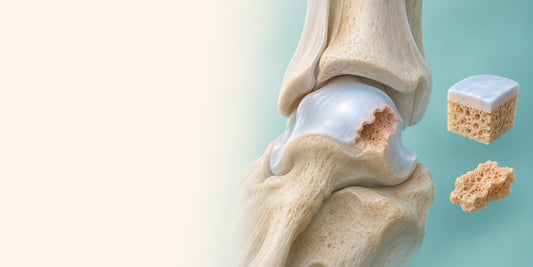
If a talar osteochondral lesion is deep, structurally complex or remains symptomatic after treatment, the next step may involve more than another cartilage-surface procedure. Assessment needs to consider the joint surface, the supporting bone and whether the damaged area can be reconstructed reliably.

Reported reconstruction options include autologous grafting and local reconstruction. These include selected cases treated without medial malleolar osteotomy and larger, irregular defects requiring osteotomy for access. Suitability depends on symptoms, imaging, previous treatment and clinical examination.

Local talar osteochondral reconstruction addresses a defined defect. Widespread osteonecrosis, major collapse and advanced ankle arthritis need separate assessment.

Understand the Defect Before Choosing a Graft

A large lesion or a cyst on MRI does not automatically mean grafting is needed. Symptoms, previous treatment and the condition of the surrounding joint matter. Nonsurgical care may still be appropriate.

More Than a Surface Cartilage Injury

A deep defect, a substantial bone cavity or disruption of the cyst wall may require attention to the underlying bone as well as the cartilage. Covering the surface with a cartilage-repair material does not automatically address the bone defect.

Location and Shape Matter Too

Two lesions with similar surface areas may differ in depth, location and the condition of the surrounding bone. Difficult-to-reach or irregular defects require an individual discussion of access, graft shape and fixation.

Persistent Symptoms Need Reassessment

Pain after microfracture, cartilage repair or bone grafting calls for reassessment of the lesion, ankle stability and other possible causes. Dissatisfaction with an earlier treatment is not, by itself, a reason to proceed with another operation.

Three Treatment Discussions That Can Overlap

These are treatment principles, not three separate packages. Surface repair, bone-cavity treatment and structural reconstruction may form part of the same plan.

Cartilage Repair: Addressing the Joint Surface

Microfracture and selected scaffold-assisted approaches focus on repair within the cartilage defect. A substantial underlying bone defect requires its own assessment.

Bone Cyst Treatment: Addressing the Bone Cavity

Depending on the cartilage and surrounding bone, treatment may involve retrograde access, cyst debridement and grafting. Drilling, debridement and grafting are different steps rather than interchangeable treatments.

Complex Reconstruction: Rebuilding the Local Structure

Larger, irregular or poorly contained defects may require a more detailed discussion of graft type, shape, support and surgical access. Cartilage-surface treatment may still form part of the overall plan.

Not All Grafts Contain the Same Tissue

The tissue source and composition need to be explained clearly. An autologous graft comes from your own body; this term alone does not tell you which tissue it contains.

Graft Tissue from Your Own Iliac Crest

Some reported reconstruction cases show graft harvesting from the iliac crest. Using your own tissue requires consideration of both ankle recovery and the donor site. “Autologous” does not mean that harvesting adds no burden.

Bone Support and Surface Repair Have Different Roles

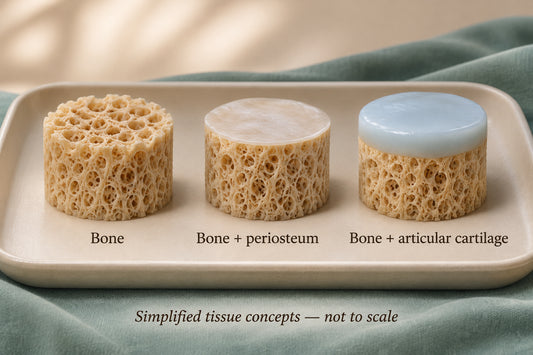
The presentation uses several graft descriptions: iliac fibrochondral bone-plug grafting, osteoperiosteal plugs and autologous osteochondral grafting. These labels are not interchangeable, and the slides alone do not fully resolve the tissue composition in every case. Some examples combine a graft with CF surface treatment. Before treatment, the surgeon should specify the donor site, whether the graft contains bone, periosteum or articular cartilage, and the role of any surface material. An iliac graft should not automatically be presented as a knee-derived osteochondral graft or as containing native hyaline cartilage.

Explore ChondroFiller (CF)

An Iliac Graft Is Not Automatically a Knee-Derived OATS Graft

An iliac bone or osteoperiosteal graft differs from a knee-derived osteochondral graft containing articular cartilage. Donor talar osteochondral graft availability requires confirmation.

Questions About Graft Choice

Can I choose a graft type before assessment?

Choose Access That Allows the Defect to Be Treated Properly

The objective is to reach and reconstruct the lesion appropriately. A smaller incision or avoidance of an osteotomy is not, by itself, evidence of a better result.

Reconstruction Without Osteotomy in Selected Cases

Dr. Hou’s presentation includes examples of autologous grafting without osteotomy. Whether this is appropriate depends on lesion location, access and graft placement requirements. An illustrated case does not establish suitability for everyone.

Some Defects Require Medial Malleolar Osteotomy

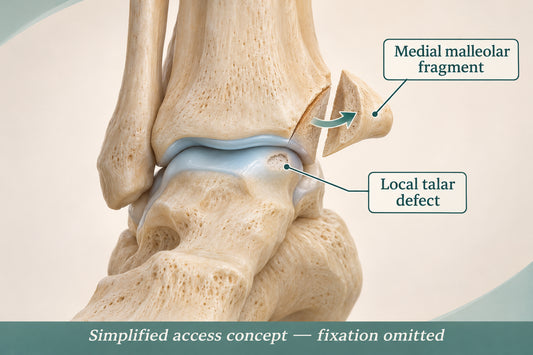
For a large, irregular lesion with cyst-wall disruption, the presentation shows medial malleolar osteotomy and screw fixation. Here, osteotomy provides access to the defect and creates an additional bony site that must heal and be monitored.

An osteotomy provides access to the defect; it is not an ankle fusion.

Assess the Osteochondral Lesion and Ankle Stability Separately

Some reported cases include ankle instability or previous ligament repair. Osteochondral reconstruction does not automatically replace ligament treatment, and a stable ankle does not mean that an osteochondral lesion has resolved.

The Aim Is Better Function—not a Guaranteed Original Joint Surface

Treatment aims to address damaged bone and cartilage in the hope of improving pain and activity. Imaging alone does not establish normal cartilage or readiness for sport. The following are risk categories to discuss, not Dr. Hou’s complication rates.

Graft Healing and Persistent Symptoms

Discuss incomplete graft integration, persistent pain, stiffness and the possibility of further treatment. Implanting a graft is not the same as achieving healing.

Donor-Site and Osteotomy Considerations

Graft harvesting can add donor-site pain or discomfort. If an osteotomy is required, bone healing and fixation-related problems also need discussion.

Surgical Risks and Functional Limitations

Wound problems, infection, neurovascular injury and limitations in movement require individual assessment. Arthroscopy or navigation assistance does not eliminate these risks.

Recovery Must Match the Actual Reconstruction

Cartilage treatment, bone grafting, osteotomy and any ligament procedure may impose different restrictions. There is no universal countdown for every reconstruction.

Clarify Protection and Weight-Bearing

Before discharge, obtain written instructions on a cast or brace, permitted loading, follow-up and the criteria for progressing. If ligament treatment is performed as well, its restrictions also need to be included.

Walking Is Not the Same as Being Ready for Sport

Movement, strength, balance and sporting ability need progressive recovery. Return to work and sport should consider symptoms, function and clinical assessment—not just the number of weeks since surgery.

Plan Follow-Up Before Returning Home

Clarify wound and imaging reviews, rehabilitation at home, remote follow-up and how to obtain urgent help. Discharge does not automatically mean fitness for a long-haul flight. Travel planning requires an individual assessment, including mobility and clot risk.

Illustrated Cases Explain an Approach; They Do Not Establish Comparative Effectiveness

Reference: Dr. Hou’s “距骨骨软骨损伤的暨大全套治疗详解英文版” teaching presentation, particularly slides 6, 27–42 and 44.

General context: 2024 DGOU recommendations on operative management of talar osteochondral lesions and AOFAS position statement on osteochondral lesions.

Which reconstruction approaches have been reported?

What can these materials not establish?

What does independent guidance add?

Which source materials support this discussion?

Questions International Patients Ask

Does a large talar lesion always require a graft?

Can a collagen scaffold replace missing bone?

Will the graft come from my knee?

Can you guarantee treatment without an osteotomy?

Is this the same as total talus replacement?

Can a video consultation determine my final operation?

Will I return to running or my previous sport?

Can the published cases predict my chance of success?

Start with Your Talar Lesion, Not a Preselected Operation

Dr. Huige Hou can participate in case assessments or video consultations, subject to confirmed arrangements. Begin with your country, main symptoms, their duration, previous treatment and the activities you hope to return to. Continued care near home may still be appropriate.

If you proceed to a paid assessment, the team will explain the required records, submission process, service scope and fees. Useful records include existing MRI, CT or X-ray images and reports, operation records, graft or implant details and rehabilitation history. Arrange new investigations only when recommended for your clinical needs.

Free: initial enquiry with the coordination team. Paid: medical-record preparation and assessment coordination. Charged separately: doctor video consultation. Tests, surgery, grafts or implants, rehabilitation and travel require an individual estimate.

Start a Free Initial Inquiry

Prepare These Records for Assessment

  • Symptoms, activity limitations and treatment goals.
  • Existing imaging reports and original images, if available.
  • Previous operation, graft and implant records.
  • Rehabilitation history, medical conditions and medications.
  • Access to local follow-up and rehabilitation.

Send My Free Initial Inquiry

Briefly describe your country, main symptoms and previous treatment. The free enquiry is handled by the coordination team and does not include a diagnosis or individual treatment plan. Please do not include passport details, payment information or complete medical records in this initial form. Instructions for sharing detailed records will follow. 

Dr. Hou’s Foot & Ankle Guide · Cartilage Repair · Bone Cyst Treatment · Privacy Notice · Service Terms · Refund and Cancellation

Still experiencing ankle pain?

Explore persistent ankle pain and associated injuries to understand why symptoms may need reassessment before choosing another treatment.