
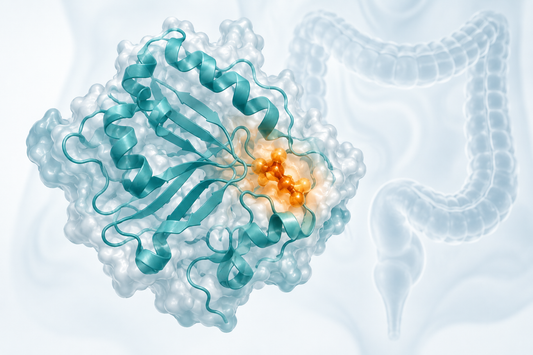
Multidisciplinary Research Collaboration in Colorectal Cancer and Peritoneal Metastasis

MULTIDISCIPLINARY RESEARCH COLLABORATION

Research Behind the Questions That Matter to Patients

When you or someone you love is facing colorectal cancer or peritoneal metastasis, research matters most when you can understand what it may mean for your situation.

Professor Hui Wang’s published work includes collaborations across surgery, oncology, imaging, pathology, molecular biomarkers and biomaterials. These studies explore questions about identifying disease, assessing treatment options, understanding outcomes and addressing recovery after treatment.

Research does not establish that a test or treatment is available or suitable for every patient. Individual recommendations require clinical assessment.

All images on this page are AI-generated educational illustrations. Doctor depictions are based on Professor Hui Wang’s supplied portrait. They are not photographs of actual consultations, research teams or study results.

Research across disciplines

Professor Hui Wang’s published work connects colorectal and peritoneal disease research with imaging, pathology, molecular investigation and materials science.

Understanding peritoneal disease

Research explores disease affecting the lining and surfaces within the abdomen. Clear anatomical context helps you understand the questions being investigated.

Looking closer at the evidence

Tissue and molecular studies add different kinds of information. Their relevance to an individual patient depends on the study population, evidence and clinical assessment.

START WITH YOUR QUESTIONS

What Would You Like to Understand?

You do not need to understand every scientific term to ask useful questions about your care. Start with the concern that matters most to you.

Finding disease

Explore research into imaging, molecular markers and approaches to assessing disease that may be difficult to identify.

Discussing treatment

Learn how researchers study tumour characteristics, molecular findings and outcomes to understand treatment selection.

Recovery and daily life

Discover research addressing bowel function, surgical complications and tissue repair beyond tumour control.

Asking about research

Understand how consultation differs from research participation, and what needs to be confirmed before joining a study.

CONNECTING DIFFERENT PERSPECTIVES

How Different Research Fields Contribute

A difficult cancer question may involve more than one type of information. Research collaboration brings different methods together to investigate the disease from several perspectives.

These are research fields, not a fixed clinical team assigned to every patient. The specialists involved in individual care depend on the clinical question and confirmed institutional arrangements.

Colorectal and Peritoneal Surgery

Surgical research examines disease assessment, treatment sequencing, patient selection and outcomes after an operation.

Oncology

Oncology research explores how drug treatments and surgical approaches may fit together, and how outcomes differ between patient groups.

Imaging and Data Science

Researchers investigate whether information from medical images and analytical models can improve assessment of peritoneal metastasis.

Pathology

Studies of tumour tissue examine whether microscopic features provide additional information about disease behaviour and prognosis.

Molecular Biomarkers

Molecular research investigates tumour-related DNA and other biological features that may explain disease behaviour or support future assessment methods.

Biomaterials and Tissue Repair

Biomaterials research explores materials for tissue repair, wound management and local delivery of therapeutic agents.

DETECTION AND ASSESSMENT

Research into Detecting Peritoneal Metastasis

A central research question is whether different sources of information can help clinicians assess peritoneal disease more accurately.

Questions to Discuss: What does my current assessment show, and what remains uncertain? Would reviewing existing imaging or pathology clarify the next step? Is an additional test established or being studied? How would its result change the proposed plan?

Imaging-Based Research

The publication list includes development and validation of an image-based deep learning algorithm for detecting synchronous peritoneal metastasis in colorectal cancer. The question is whether computer-assisted analysis can identify useful information within medical images. A published algorithm does not establish routine availability or suitability for an individual scan.

DNA in Peritoneal Fluid

A prospective study investigated cell-free DNA in peritoneal lavage fluid as a possible marker of colorectal cancer spread to the peritoneum. Its final analysis included 51 patients at one institution. Findings were promising but require further validation. The abdominal fluid was collected through a clinical procedure; this is not an ordinary blood test.

Assessing the Risk of Occult Disease

Other studies examine risk factors and prediction models, including disease not apparent during initial assessment. Models study patterns across patient groups; they cannot independently confirm or exclude disease in one person.

EVIDENCE FOR INFORMED DISCUSSIONS

Research into Treatment Selection

Research can help explain why different treatment approaches are investigated. It cannot replace an individual assessment.

Questions to Discuss: Which findings matter most in assessing my options? What is the intended goal of treatment? Which parts of the recommendation are supported by established evidence? What uncertainties and alternatives should I understand?

Research cannot determine your treatment eligibility or predict your personal outcome on its own.

Understanding Tumour Biology

Published work examines BRAF mutation and molecular status in colorectal cancer with peritoneal metastasis. These studies investigate how biological differences relate to outcomes and surgical treatment. They do not establish a universal rule for everyone with the same molecular finding.

Studying Treatment Sequence

The supplied research record lists clinical studies examining systemic treatment and cytoreductive surgery in different settings. These projects address sequencing and patient selection. The record does not confirm current recruitment or establish results for every listed project.

Learning from Pathology

A JAMA Surgery study examined a pathomics signature in stage III colon cancer and its relationship with prognosis and chemotherapy benefit. This was a retrospective study in a different disease setting; its findings should not be directly applied to patients with peritoneal metastasis.

BEYOND TUMOUR CONTROL

Research into Recovery and Quality of Life

Patients and families need information about daily life after treatment. The publication list includes research on bowel function, postoperative complications and tissue repair.

Questions to Discuss: What changes in bowel function should I discuss before treatment? Which recovery concerns relate to the proposed procedure? What follow-up and supportive care would be needed? Who should I contact if problems develop after returning home?

Bowel Function After Treatment

A study developed and validated a model for bowel dysfunction after rectal cancer resection following radiotherapy. This addresses how treatment may affect everyday function. Findings relate to that specific setting, not every colorectal operation.

Understanding Surgical Complications

Other publications investigate anastomotic leakage, collagen changes and infection after ileostomy reversal. These studies involve different procedures and patient groups. They should not be interpreted as a promise that complications can be prevented.

Tissue Repair and Biomaterials

Research on hydrogels, patches and other materials explores tissue adhesion, wound healing and abdominal wall repair. Whether a material is approved, available or appropriate for clinical use requires separate confirmation.

UNDERSTANDING THE LIMITS

What Is Still Being Investigated?

A scientific publication and an available medical service are different things. Understanding the stage of evidence helps you ask clearer questions.

AI-based image analysis, peritoneal fluid DNA testing and investigational biomaterials must each be described according to their actual evidence and availability.

Before considering an approach, ask what has been validated, what remains uncertain, whether it is available and how it would affect your care.

Published does not automatically mean available, approved or appropriate for me.

Laboratory and Materials Research

Investigates mechanisms, material properties or experimental approaches. It does not establish that an approach is proven effective and safe for routine patient care.

Diagnostic or Prediction Research

Studies a test or model in a defined patient group. It does not establish equal performance in every population or replacement of existing assessment methods.

Clinical Treatment Research

Examines treatment questions in human participants. A publication does not establish that a study is recruiting or that every patient is eligible.

Individual Clinical Care

Applies clinical judgment and relevant evidence to a person’s circumstances. It does not guarantee an outcome or automatic access to experimental approaches.

CLINICAL AND ACADEMIC BACKGROUND

Professor Hui Wang’s Research Background

The supplied professional biography identifies Professor Hui Wang as a chief physician and doctoral supervisor at the Sixth Affiliated Hospital of Sun Yat-sen University, with a leadership role in colorectal surgery.

His documented interests include the development of colorectal peritoneal metastasis, diagnostic assessment, treatment strategies, postoperative complications and biomaterials.

The publication list includes collaborative work in JAMA Surgery, Annals of Surgery, Gastroenterology, Advanced Materials and Advanced Science.

Several publications identify Professor Hui Wang as a co-corresponding author. Professional appointments and authorship do not imply institutional endorsement of medChina. Current roles and consultation availability require confirmation.

The supplied records list roles in groups concerned with peritoneal tumours, colorectal disease, nutrition, rehabilitation and medical innovation.

Clinical and academic background

His documented interests include the development of colorectal peritoneal metastasis, diagnostic assessment, treatment strategies, postoperative complications and biomaterials.

Collaboration Across Disciplines

Publications connect clinical research with pathology, imaging analysis, molecular investigation and materials science.

SELECTED PUBLICATIONS

Selected Studies and What They Mean

These studies illustrate research questions relevant to patients. They are not a list of treatments available through this website.

RESEARCH PUBLICATION

Imaging Analysis · Annals of Surgery, 2022

Development and Validation of an Image-based Deep Learning Algorithm for Detection of Synchronous Peritoneal Carcinomatosis in Colorectal Cancer. Investigates computational image analysis for detection; does not establish routine availability or replace clinical interpretation.

RESEARCH PUBLICATION

Peritoneal Fluid DNA · Clinical Epigenetics, 2023

Peritoneal cell-free DNA as a sensitive biomarker for detection of peritoneal metastasis in colorectal cancer. A prospective diagnostic study with 51 patients in the final analysis at one institution. Further validation is needed; the specimen is peritoneal lavage fluid, not an ordinary blood sample.

RESEARCH PUBLICATION

Pathomics · JAMA Surgery, 2024

Pathomics Signature for Prognosis and Chemotherapy Benefits in Stage III Colon Cancer. Investigates quantitative pathology features. Retrospective stage III colon cancer findings cannot be directly applied to peritoneal metastasis.

RESEARCH PUBLICATION

Bowel Function · Gastroenterology, 2023

Development and Validation of a Post-Radiotherapy Prediction Model for Bowel Dysfunction After Rectal Cancer Resection. Addresses functional outcomes in a defined treatment setting. Individual relevance requires clinical interpretation.

RESEARCH PUBLICATION

BRAF and Surgical Outcomes · Gastroenterology Report, 2023

Effect of BRAF mutation on the prognosis for patients with colorectal cancer undergoing cytoreductive surgery for synchronous peritoneal metastasis. Examines a molecular feature in a specific surgical group. A molecular result alone is not a complete assessment of suitability or personal prognosis.

RESEARCH PUBLICATION

Injectable Biomaterials · Advanced Materials, 2025

Injectable Functional Porous Carbon-Loaded Hydrogel with Long-Term Retention and Synergistic Anti-Tumor Properties for Tumor Therapy. Explores local delivery and sustained retention of therapeutic components. Publication does not establish an approved or available treatment through medChina.

THREE ENQUIRY PATHWAYS

Consultation and Research Participation

Seeking a specialist opinion and asking to join a study are separate requests. Choosing the right enquiry clarifies what needs to be confirmed next.

For Patients and Families

Start by asking about consultation arrangements: the relevant clinical service, appointment process and information required through the institution’s approved process. Contacting medChina does not confirm an appointment with Professor Hui Wang, access to a test or eligibility for treatment.

For People Interested in Research

Participation depends on an open study, its criteria and the research team’s assessment. Request the registration, participating institution, recruitment status, requirements, risks and costs before making plans. The supplied documents do not establish current recruitment or international eligibility.

For Clinicians and Researchers

Professional enquiries may describe a proposed question, relevant discipline and intended form of collaboration. Any collaboration requires confirmation by the researchers and institutions. This page does not establish an institutional partnership.

CLEAR ANSWERS

Frequently Asked Questions

Understand what research can tell you, what needs confirmation and how to begin an enquiry.

Evidence and personal relevance

A published result does not establish that an approach is available or appropriate for you. Discuss the study setting and the limits of the evidence.

Availability and eligibility

Study availability, eligibility and participation require separate confirmation. An enquiry does not secure a place in a study.

International enquiries and costs

Ask about communication, coordination and costs before making travel plans. Arrangements depend on the confirmed service.

Evidence and personal relevance

What does multidisciplinary research mean for patients?

Is research collaboration the same as an MDT consultation?

Is peritoneal fluid DNA testing the same as a blood test?

Can an AI model tell me which treatment I should receive?

Availability and study eligibility

Are all the described technologies available in routine care?

Does a published study mean I am eligible for treatment?

Are clinical studies currently recruiting?

International enquiries and practical arrangements

Can international patients enquire?

How much does consultation or participation cost?

What should I submit in my first enquiry?

YOUR NEXT STEP

Ask About Your Next Step

You may be trying to understand a finding, explore consultation arrangements or ask whether a study could be relevant. Start with a brief contact enquiry.

Any appointment, test, treatment or research opportunity must be confirmed by the responsible clinical or research institution.

Use the native contact form below for your name and email. In the optional message, you may add your country or region, preferred language and whether your enquiry concerns consultation, research information or professional collaboration.

Do not submit medical records, scans, identity documents or detailed medical history here. If clinical information is needed later, request the appropriate secure submission process.

An enquiry does not establish a doctor-patient relationship or guarantee consultation, treatment or research enrolment.

Send a brief enquiry

Share your name, email and the purpose of your enquiry. You may include your country or region and preferred language. Please do not send medical records here.

Clarify your enquiry

Discuss whether your request concerns consultation, research information or professional collaboration, and clarify the appropriate next contact.

Confirm the next arrangement

Confirm the responsible institution, availability, process and any costs before making appointments or travel plans. An enquiry does not guarantee consultation, treatment or research participation.

Contact medChina

Consultation arrangements, fees and research eligibility require separate confirmation.

Send a Contact Enquiry

Please share contact details only. You may include your country or region, preferred language and enquiry type in the optional message. Do not submit medical records or detailed health information.

Read our Privacy Policy

Sources and Editorial Information

Prepared from Professor Hui Wang’s supplied professional biography, academic appointment list and publication list, together with the linked research publications. This educational overview does not provide a diagnosis or individual treatment recommendation.

medChina’s coordination role is separate from clinical and research decisions made by healthcare professionals and participating institutions. Findings may relate to specific patient groups, settings or experimental methods; relevance and availability require confirmation.

Explore peritoneal metastasis consultation information · Privacy Policy

Images are AI-generated educational illustrations, not original study figures or documentary photographs. They do not establish institutional endorsement or treatment outcomes.

Editorial update: 22 October 2026. This page summarises supplied professional records and linked publications; it does not claim independent medical review.