
Can I Preserve My Breast? | Professor Fengxi Su
01 · Understand the question
Can I preserve my breast?
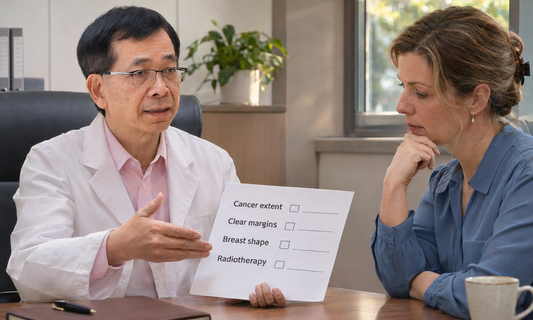
Breast conservation may be an option when the cancer can be removed with clear edges, an acceptable breast shape can remain, and the rest of the treatment plan is suitable for you.
- What stays: the breast remains, apart from the cancer and some surrounding tissue.
- What matters: your team checks disease extent, tissue edges and the need for radiotherapy.
What must the team check first?
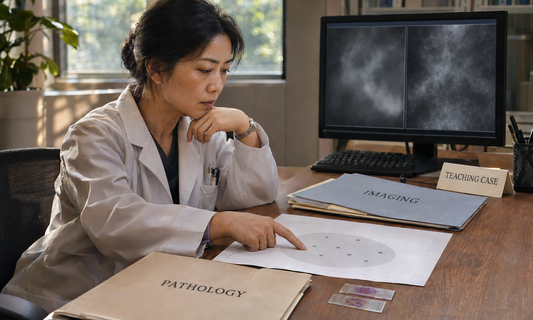
A lump measurement alone cannot decide whether breast conservation is suitable. Your team needs the diagnosis, the extent seen on imaging, and the relationship between the affected area and your breast.
- Pathology: what type of breast disease is present?
- Imaging: is there disease beyond the main lump?

Does removing more breast always mean a better result?
A study coauthored by Professor Su compared breast conservation and mastectomy. After matching patients on measured characteristics, it did not detect a significant difference in the survival outcomes studied. This observational comparison cannot prove the operations are identical for every patient.
- Compare complete plans, including treatment after surgery.
- Ask which options are medically suitable in your case.
02 · Weigh the details
What if cancer reaches the edge?
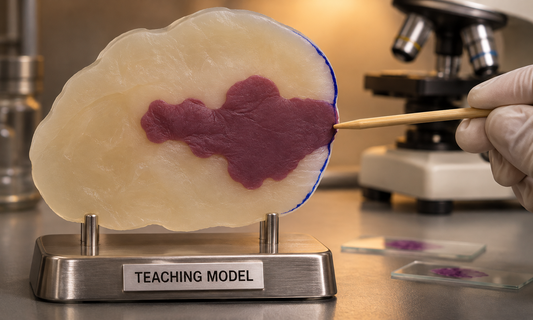
A margin is the outer edge of the tissue removed. If cancer reaches an edge, more treatment to that area may be needed. Your team reviews the final pathology before deciding whether another operation is appropriate.
- Ask what the final margin result means for your cancer type.
- Ask what the next step would be if an edge is involved.
How does radiotherapy affect my choice?
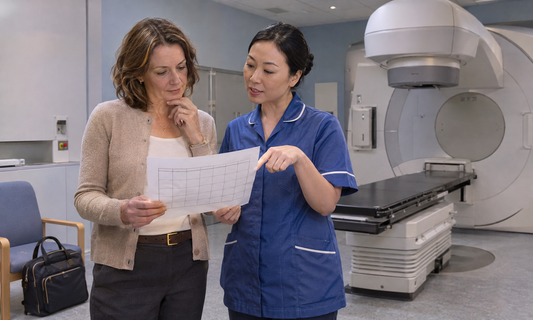
Radiotherapy is usually part of breast-conserving treatment. Whether it is appropriate and practical needs discussing before surgery. Exceptions require an individual review of the cancer features and the treatment plan.
- Planning: discuss the expected treatment sequence.
- Practical needs: raise travel and access concerns early.
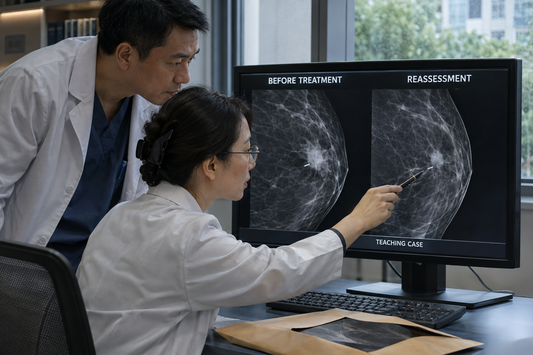
Can the plan change after treatment before surgery?
Treatment given before surgery can change the size and extent of a tumour. Breast conservation may then be reconsidered, but the remaining disease still needs careful assessment and clear surgical margins.
- Bring both the earlier and the most recent images.
- Ask how the original tumour area will be identified.
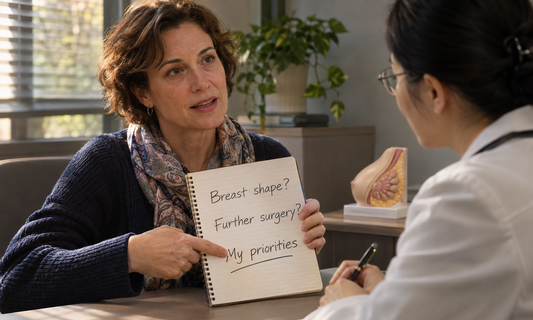
What matters to me about the result?
Cancer treatment requirements come first, and your preferences also belong in the discussion. Ask about likely changes in breast shape, the possibility of further surgery, and whether an oncoplastic approach is worth considering.
- Shape: discuss realistic possibilities for your breast.
- Preferences: explain what you most want to preserve or avoid.
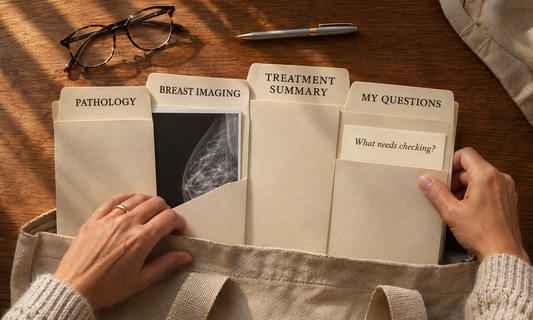
03 · Prepare your next step
What should I bring to the consultation?
Prepare your pathology report, breast imaging and any treatment summary. Ask the team to explain which options fit your findings, what each involves after surgery, and what information is still missing.
- Key question: why is each option suitable or unsuitable for me?
- Next step: agree what needs checking before choosing.
Evidence and Further Reading
This educational guide draws on publications coauthored by Professor Fengxi Su. Additional current guidance is identified separately. The explanations support discussion with your care team and do not determine individual treatment.
- Clinical practice guideline for breast-conserving surgery in patients with early-stage breast cancer: Chinese Society of Breast Surgery (CSBrS) practice guidelines 2021. (2021). Coauthored by Professor Su.
- Comparison of breast-conserving surgery and mastectomy in early breast cancer using observational data revisited: a propensity score-matched analysis. (2018; 61(12):1528–1536). Coauthored by Professor Su.
- Cavity margin status is an independent risk factor for local-regional recurrence in breast cancer patients treated with neoadjuvant chemotherapy before breast-conserving surgery. (2011). Coauthored by Professor Su.
- In pursuit of a flawless aphrodite: paving the way to scarless oncoplastic breast surgery. (2019). Coauthored by Professor Su.
Related guides
Use the contact form to ask about consultation arrangements. Sending a message does not confirm an appointment. The form is not an emergency service.