
Breast-Conserving Surgery: Am I Suitable? | Professor Fengxi Su
01 · Your Options
Can I Keep My Breast?
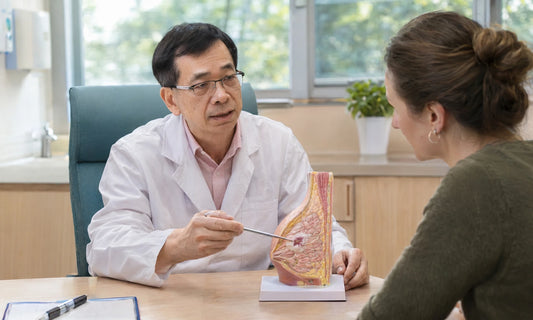
Breast-conserving surgery removes the cancer while keeping the rest of the breast.
- The operation: Also called a lumpectomy, it removes the cancer and a rim of surrounding tissue.
- The full treatment: Radiotherapy usually follows. Cancer medicines or lymph-node treatment may also be needed.
- Your assessment: Your team reviews scans and pathology to plan complete removal, breast shape and further treatment.
Your preference matters. This page cannot determine whether you are suitable.

Does Mastectomy Improve Survival?
For suitable early breast cancer, removing the whole breast has not shown a survival advantage over breast conservation with radiotherapy.
- What the trials found: At 20 years, overall survival did not differ significantly between these options.
- What can differ: The chance of cancer returning in the breast or nearby area can differ between treatments.
Choose with your team, considering your cancer, further treatment and preferences. Trial averages cannot predict your outcome.
What Does the Surgeon Remove?
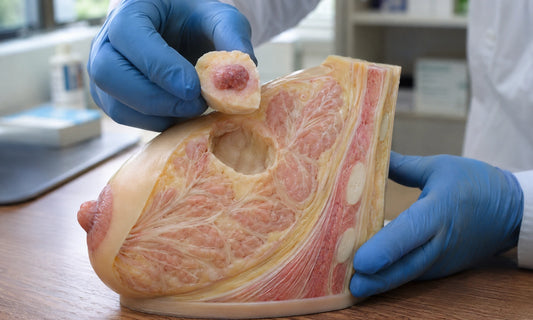
The surgeon removes the cancer and nearby tissue, while keeping the remaining breast.
- How much is removed: This depends on the location and extent of the cancer.
- What is checked: A pathologist examines the removed tissue and its edges under a microscope.
- What is assessed separately: Whether you need underarm lymph-node treatment or cancer medicines.

Could Breast Conservation Suit Me?
Some patients with early breast cancer may be suitable; tumour size alone is not enough.
- Cancer extent: The guideline considers clinical stage I or II, or a tumour category up to cT2. T2 means over 2 cm and up to 5 cm.
- Surgical requirements: Your team expects clear tissue edges and an acceptable breast shape.
- Your choice and further care: You want to keep your breast and can complete any required radiotherapy.
Age under 35, a tumour near the nipple, bloody nipple discharge or several cancer spots needs careful assessment; none automatically rules out breast conservation.
When Might It Be Unsuitable?
Some findings make breast conservation unsuitable; others need closer assessment.
- Main barriers: Clear tissue edges cannot be achieved, required radiotherapy cannot be given, or inflammatory breast cancer is present.
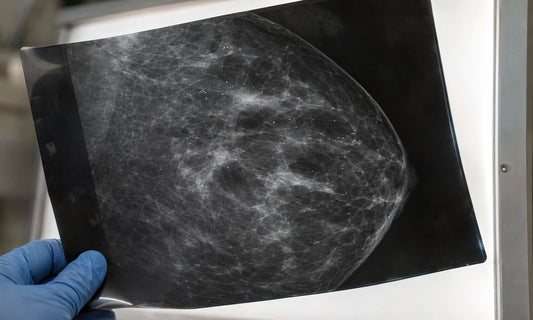
- Imaging findings: The guideline also lists widespread microcalcifications: tiny calcium deposits. Their pattern and extent need specialist review; not all deposits mean cancer.
- Your choice: You may decide against breast conservation after discussing your options.
Leaving out radiotherapy is an exception for carefully selected patients after specialist review.
02 · Surgery and Margins
Can Treatment First Help?
Chemotherapy before surgery can shrink some larger cancers and make breast conservation possible.
- Before surgery: This treatment is called neoadjuvant chemotherapy.
- After treatment: The team reassesses the cancer and the area that needs removal. A smaller lump on a scan does not prove all cancer cells have gone.
- At surgery: Clear tissue edges are still essential. The guideline sets no single removal area for everyone after chemotherapy.
Your surgeon must plan the operation for your case.
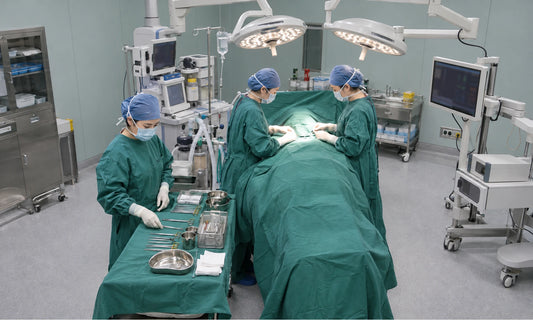
How Is Breast Shape Preserved?
Cancer removal and breast shape are planned together.
- Reshaping: Oncoplastic surgery may move remaining breast tissue to fill the space left by the tumour.
- Realistic expectations: Appearance may improve, but the same shape or feel cannot be promised. Adequate cancer removal remains essential.
- Small markers: Metal clips mark the removal area so the radiotherapy team can target an extra dose if needed.
Discuss the likely appearance and the possibility of further surgery before deciding.
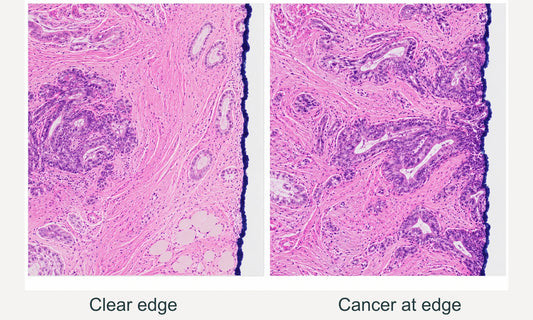
What Is a Clear Margin?
A margin is the outer edge of the tissue removed during surgery.
- A clear margin: No cancer is found at the assessed boundary under the microscope. Doctors also assess how close cancer comes to the edge where measurable.
- Cancer at the edge: Some cancer may remain. More tissue may need removing; radiotherapy does not cancel the extra recurrence risk.
If clear margins cannot be achieved, whole-breast removal may be advised. Clear margins do not mean zero recurrence risk.
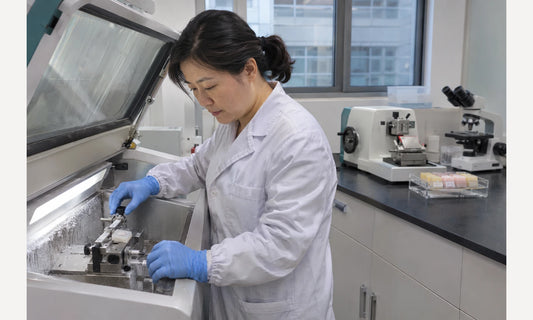
How Are Margins Checked?
The guideline recommends checks both during surgery and afterwards.
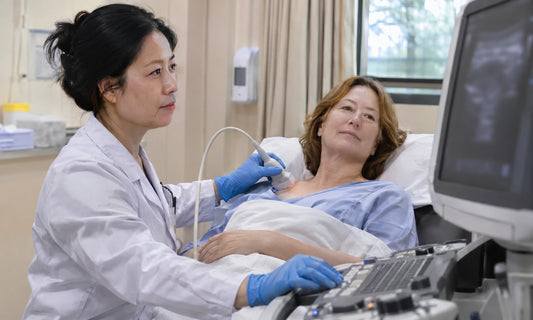
- During surgery: A rapid frozen-tissue check examines the removed edges or samples from the space left behind.
- After surgery: A detailed laboratory examination confirms the result. A reassuring rapid check does not replace it.
Standards differ by method and cancer type. With whole-breast radiotherapy, international guidance uses no cancer touching the inked edge for invasive cancer and usually 2 mm for DCIS (cancer confined to milk ducts). The 2021 Chinese panel did not adopt these routinely. Ask which current standard applies to you.
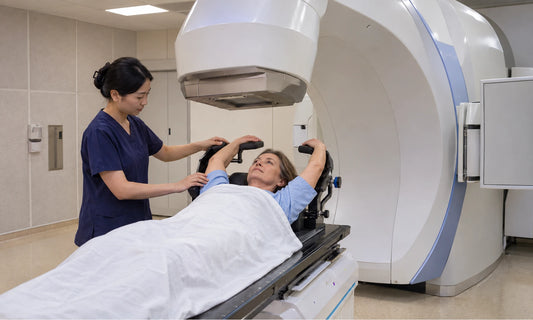
03 · Further Treatment
Why Is Radiotherapy Needed?
Radiotherapy lowers the chance of cancer returning in the remaining breast.
- What it treats: Microscopic cancer cells that cannot be seen or felt, even after removal with clear tissue edges.
- When to plan it: The guideline recommends whole-breast radiotherapy after breast conservation. Discuss it before choosing surgery.
- Who plans it: Your radiation specialist decides the treatment area and schedule.
Some carefully selected older patients may discuss leaving it out, accepting a higher risk of local recurrence.
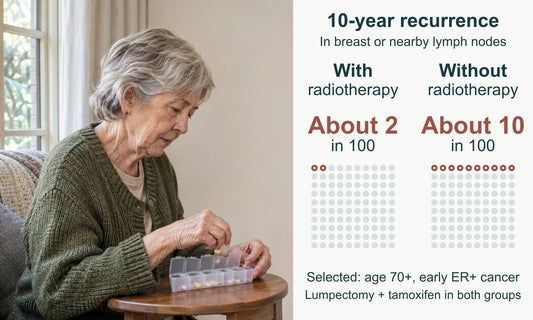
Can Older Patients Skip Radiotherapy?
Age alone is not enough to decide. The benefit must be weighed against recurrence risk.
- Who was studied: CALGB 9343 included women aged 70 or older, mainly with stage I, oestrogen-sensitive cancers up to 2 cm, clear margins and no clinical signs of cancer in underarm nodes. All had lumpectomy and tamoxifen.
- At 10 years: Breast or nearby lymph-node recurrence was about 2 in 100 with radiotherapy and 10 in 100 without. Overall survival did not differ significantly.
Discuss your cancer features, health, preferences and ability to take hormone treatment with your team. These results do not apply to every older patient.
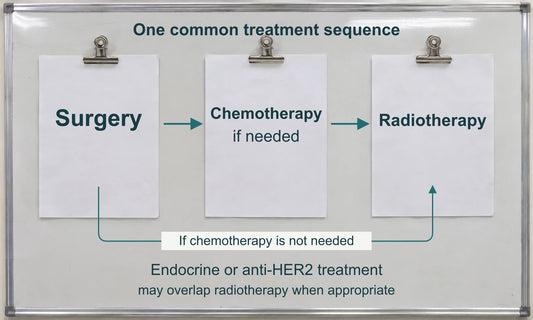
What Is the Treatment Order?
If chemotherapy is needed after surgery, it is usually completed before breast radiotherapy.
- Surgery: Remove the cancer and check the tissue edges.
- Chemotherapy, if needed: Complete the planned course before radiotherapy.
- Radiotherapy: Treat the remaining breast according to your plan.
Hormone-blocking medicines and HER2-targeted treatment, such as trastuzumab, may overlap with radiotherapy when appropriate. Your test results guide which medicines you need. Ask for a written timetable and who will arrange treatment and monitor you.
04 · Preparing for a Review
How Do I Prepare for a Review?
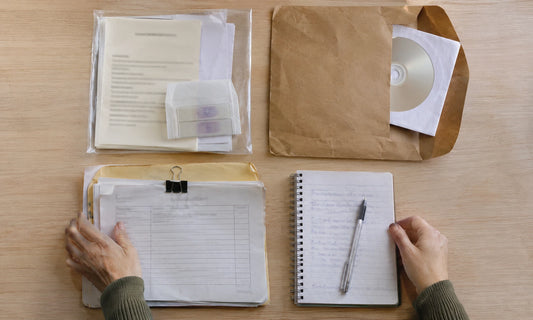
Prepare your records and the questions you want the specialist to answer.
- Records to prepare: Biopsy or surgery reports, breast scans and reports, previous treatment dates and any tissue-edge results.
- Questions to discuss: Can I keep my breast? How might its shape change? Could I need more surgery? What treatment follows?
- First contact: Send contact details and general questions. The team will explain how to share records; the contact form has no file upload.
medChina.global coordinates enquiries. Suitability, Professor Su's availability and consultation arrangements need individual confirmation.
Evidence and Image Information
Source: CSBrS guideline, 2021 · PMID 34133359. Chen K, Liu JQ, Wu W, Su FX, Zou Q and Song EW: Clinical practice guideline for breast-conserving surgery in patients with early-stage breast cancer. Chinese Medical Journal, 134:2143–2146. DOI: 10.1097/CM9.0000000000001518.
Professor Fengxi Su is a coauthor. This publication combines research evidence and expert recommendations for clinicians in China; it is not a trial reporting his personal surgical success rate. This page explains the article in everyday language, with original studies and margin guidance checked where clarification is needed. It describes the 2021 evidence and does not replace an individual assessment using current guidance.
Images on this page are AI-created educational scenes. The imaging and microscopic tissue views are simulated illustrations, not actual patient results or records of medical procedures.
Optional references: 2021 guideline full text; CALGB 9343 original trial; PRIME II five-year report; invasive-cancer margin consensus; DCIS margin consensus; NCI staging definitions. The key explanations and treatment considerations are provided above; you do not need to open these papers to understand this page.