
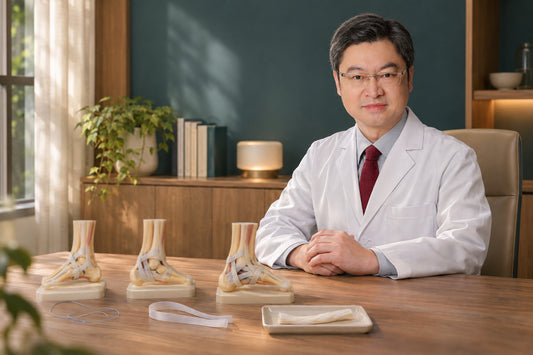

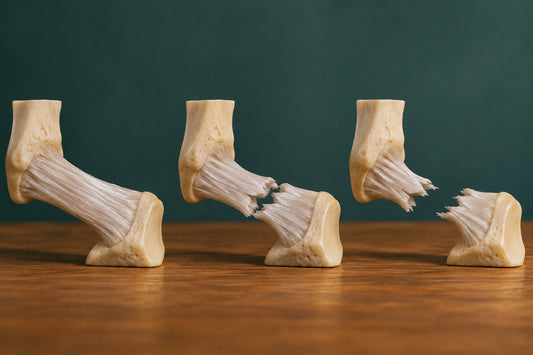
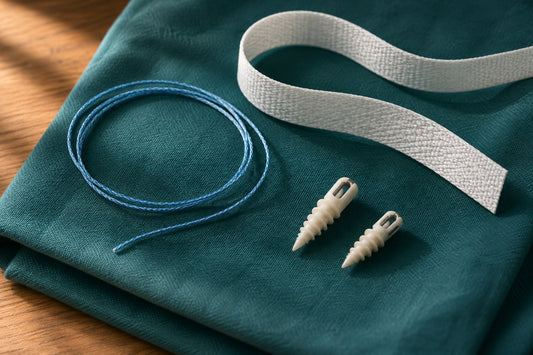
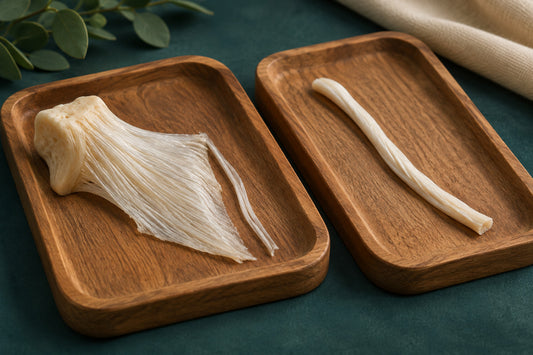

These terms describe different approaches. Repair uses ligament tissue that can be preserved; augmentation adds support to a repair; reconstruction uses a tissue graft to rebuild a stabilising structure. Dr. Hou’s materials emphasise injury location, severity and remaining tissue, rather than choosing by a procedure’s name alone.

Two Questions Before Choosing a Procedure

Is surgery indicated?

Recurrent instability, functional limits after appropriate rehabilitation and examination findings need to fit together. Pain alone or one MRI image cannot define the whole surgical plan.

What tissue remains usable?

The amount, quality and location of usable tissue matter. Dr. Hou’s arthroscopic classification distinguishes loss of tension, partial tearing, complete tearing and absorbed ligament tissue, with further distinctions by injury location. Imaging helps, but scar tissue and tissue quality may require confirmation during surgery. The classification describes the injury; it does not by itself establish that surgery is needed.

Three Strategies with Different Roles

JUMSA-related repair.

JUMSA-related repair aims to preserve and suture usable ligament tissue. The modified approach described by Dr. Hou brings the upper and lower ATFL bundles and their connected lateral tissues together, with reinforcement adapted to the injury. A fibular attachment tear, a tear within the ligament and a talar attachment tear may need different fixation. The surgeon must explain which version is proposed and why the remaining tissue can support it.

Suture or suture-tape augmentation.

Augmentation adds mechanical support; it does not mean the ligament has healed. Materials, fixation and tension differ, and excessive or insufficient tension may compromise the result.

Local transfer or tendon-graft reconstruction.

When direct repair is insufficient, local tissue transfer or a tendon graft may be discussed. These use different tissue sources and procedures, with separate considerations for donor sites, fixation, healing and risk.

Risks and Recovery Belong in the Same Discussion

Cartilage treatment targets the joint surface; cyst treatment targets underlying bone; ligament treatment addresses stabilising structures. These problems may coexist, but the procedures are not interchangeable.

Risk is not determined by incision size alone.

Possible problems include infection, nerve irritation or injury, stiffness, residual instability and reinjury. Reconstruction also requires discussion of graft and donor-site issues. Arthroscopy and augmentation do not eliminate these risks.

Recovery depends on the entire procedure.

Protection, weight-bearing, movement and return to sport should follow a staged plan. Cartilage treatment, cyst grafting or fracture fixation may require a different schedule from isolated ligament repair.

The Research Does Not Identify One Best Method for Everyone

In a retrospective comparison of 100 patients, modified suture augmentation had a higher AOFAS composite score, while pain and anterior drawer findings did not differ significantly. In a separate 50-patient study, AOFAS favoured modified suturing while satisfaction favoured suture tape. In a 57-patient comparison of InternalBrace and tendon reconstruction, tables at one, three and twelve months did not show significant differences in the principal clinical scores. Its abstract and a separate postoperative table report different findings, but that table does not identify the assessment time. These studies inform individual discussions; they do not establish one best procedure. Small samples, nonrandom treatment selection, reporting inconsistencies and limited follow-up remain important. A nonsignificant difference does not establish equivalence.

Sources and related reading: Suture augmentation versus modified suture augmentation for chronic ankle instability (2024) · Modified suture augmentation versus InternalBrace in chronic ankle instability (2025)

Hong F, Hu D, Xiao L, et al. (including Hou H). Clinical evaluation of enhanced Internal Brace and tendon reconstruction for chronic ankle instability under arthroscopy. Journal of Foot and Ankle Surgery (Electronic Edition). 2022;9(1), starting at p. 29. Chinese original: 全镜下增强的Internal Brace与肌腱重建距腓前韧带治疗慢性踝关节不稳患者的临床评价.

Frequently Asked Questions

Is JUMSA the same as InternalBrace?

Is reconstruction always better than repair?

Does stronger material let me return to sport immediately?

Can a video consultation determine the final procedure?

Are PLUS sutures, JUMSA and suture tape the same?

Which source materials support this discussion?

Prepare These Records for Further Assessment

  • Symptoms, duration, and activity limitations.
  • Existing imaging reports and original images, if available.
  • Previous treatments and operation records.
  • Rehabilitation history and current medical conditions.
  • Your goals and access to follow-up care at home.

Understand the Assessment Process Before Deciding

Your initial inquiry is free and covers your main concerns and the service process; it does not include a medical diagnosis. Coordinating a case review or matching you with a physician involves a service fee. A physician video consultation is charged separately. Charges, required records and arrangements are explained before the service begins.

Dr. Huige Hou can participate in case review or video consultation, subject to record review and scheduling. For the first inquiry, briefly describe your concern without submitting identity documents or a full medical record. Instructions for providing records can follow if a formal review is arranged.

Please describe your symptoms, previous treatment and the repair, augmentation or reconstruction options you are considering.