
Tamoxifen and Fatty Liver: Do I Need to Stop Treatment?
PATIENT GUIDE
Does fatty liver mean I must stop tamoxifen?
Not automatically. Contact your breast cancer team to review the finding and agree what to do next. Do not stop, reduce or switch tamoxifen on your own. Its benefit in lowering recurrence risk needs to be considered alongside your liver health.
Tamoxifen can be associated with fatty deposits in the liver or changes in liver enzymes. This guide addresses a new fatty-liver finding during treatment for early breast cancer. It does not determine the cause of an abnormal scan or replace a plan for known liver disease or metastatic cancer.
If your eyes or skin turn yellow, or you develop dark urine, pale stools or significant abdominal pain, contact your treatment team urgently. Seek urgent medical care if you are very unwell; do not wait for a routine appointment.
Cancer Research UK: tamoxifen, liver changes and when to contact your team
What did Professor Su's randomized study find?
Professor Fengxi Su coauthored a 2014 randomized, open-label study of 353 Chinese postmenopausal women with hormone receptor-positive early breast cancer. It compared anastrozole with tamoxifen over three years.
The primary analysis reported fatty-liver rates of 14.6% with anastrozole and 41.1% with tamoxifen; it conservatively counted participants lost to follow-up as having fatty liver. Abnormal liver-function results were similar: 24.6% and 24.7%, respectively. These are different outcomes, not interchangeable measures of liver damage.
Participants with fatty liver at the start or significant liver disease were excluded. The trial therefore does not directly tell someone with an existing fatty-liver diagnosis to stop treatment. It also does not establish the right choice for premenopausal patients or men. These are group results from an older study, not a prediction of your outcome.
Lin et al., Cancer Science, 2014: original randomized study (PMID 24975596)
What does my liver assessment need to clarify?
Fatty liver means excess fat in the liver. Fat alone is different from inflammation and from fibrosis, which means scarring. A routine scan showing fat cannot by itself establish whether inflammation or fibrosis is present.
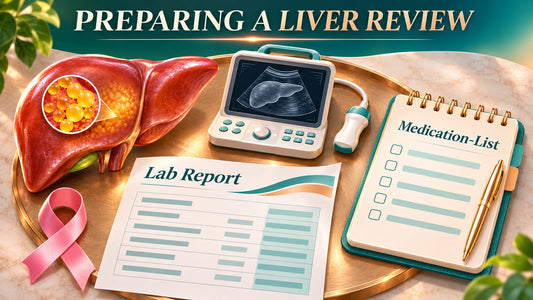
Your team may compare current and earlier liver blood tests, review the scan and assess other possible causes. Diabetes, cholesterol, weight history, alcohol use and other medicines can be relevant. Depending on the findings, further blood tests, a fibrosis assessment or a liver-specialist review may be appropriate; not everyone needs a biopsy.
Ask: Is this only fat on imaging, or is there evidence of liver injury? What additional assessment is needed? When should the tests be repeated, and who will review them? Agree the timing with your team rather than applying another patient's testing schedule.
Could another endocrine treatment be suitable?
Possibly, but the choice depends on your cancer and menopausal status. An aromatase inhibitor is commonly used after menopause. Before menopause, it requires ovarian suppression; it is not a simple tablet-for-tablet replacement for tamoxifen.
Ask your oncologist to compare continuing the current plan with an alternative, including the expected cancer benefit, side effects and monitoring. A treatment change should have a clear reason and follow-up plan. The 2014 trial does not make anastrozole the best choice for everyone.
If weight reduction is appropriate for you, gradual changes to food and activity can help metabolic fatty liver. Avoid crash dieting. Discuss supplements before taking them: some herbal products can harm the liver. These measures support assessment and treatment; they do not replace endocrine therapy.
NCI: endocrine choices and discussing troublesome side effects

What should I bring to the appointment?
Bring the scan report, recent and previous liver blood-test results, your breast pathology and treatment summary, and the date you started tamoxifen. List all prescribed medicines, over-the-counter products and supplements. Note symptoms and when they began.
Write down these questions: What is the most likely cause? Is there evidence of scarring? What is my endocrine-treatment benefit? What findings would prompt a change? Do I need a liver specialist? Who should I contact if symptoms develop before the next review?
To discuss specialist care with Professor Su's team, use his profile or contact medChina about consultation arrangements. The team will explain the separate process for submitting records; the initial contact form is not a record-upload service. Keep your existing appointments while making enquiries.
Sources and editorial notes
Prepared by the medChina Editorial Team. Evidence checked 6 November 2026. This is patient education, not individual medical advice or a claim that Professor Su authored or medically reviewed this article.
Illustrative scenes, not records of actual patient care.
1. Lin et al. Anastrozole versus tamoxifen hepatotoxicity trial, Cancer Science (2014)
2. Cancer Research UK: Tamoxifen
3. NCI: Hormone Therapy for Breast Cancer
4. NIDDK: Definition and facts of fatty liver disease