
Can I Keep My Nipple During a Mastectomy?
PATIENT GUIDE
Can my nipple be kept safely?
Sometimes, yes. Nipple-sparing mastectomy removes breast tissue while keeping the nipple, the surrounding darker skin (areola) and much of the breast skin. It may be an option when the cancer does not involve those areas and the remaining skin can heal safely.
It is used for selected people with breast cancer or DCIS, and for some risk-reducing operations. Keeping the nipple does not mean keeping a normally functioning breast. Appearance, feeling and healing all need a separate discussion. Mayo Clinic explains the procedure.
Recent robotic surgery headlines can make this choice sound widely available. BayCare announced an expanded nipple-sparing robotic program on October 28, 2026, but its report also emphasizes individual assessment. A new surgical approach does not, by itself, establish that it is right for you. Read the hospital announcement.
Start with a practical question: “What in my examination, scans and biopsy makes this option suitable or unsuitable for me?”

How does the team check the nipple for cancer?
The decision uses several kinds of evidence, not just the distance between a lump and the nipple.
The Ontario Health guideline recommends nipple preservation for suitable skin-sparing mastectomy candidates without evidence of nipple–areola involvement on examination, imaging or pathology, when technically feasible. Cancer affecting the nipple or skin changes the plan. Inflammatory breast cancer is generally not suitable for nipple-sparing surgery. Ontario Health guideline · Mayo Clinic eligibility guidance.
The tissue directly behind the nipple needs careful assessment. The American Society of Breast Surgeons describes sending this “nipple margin” separately to the pathology laboratory. Ask whether it will be checked during the operation, afterward, or both. A preliminary result is not a substitute for understanding the final report. ASBrS mastectomy resource guide.
Agree on the backup plan before surgery. If cancer reaches the margin beneath the nipple, removing the nipple–areola may be necessary, sometimes in another operation. Preserving it must not leave a known cancer problem untreated. Ontario Health recommendations.

Will it look and feel the same afterward?
Keeping the nipple cannot guarantee normal sensation or its survival.
Surgery can reduce the blood supply to the retained skin and nipple. Poor healing or tissue death, called necrosis, may require further treatment or removal. Infection and bleeding are other risks. Tell the team about nicotine use, previous breast operations and previous radiation. Mayo Clinic risks and preparation.
Breast size, drooping and other health factors can affect the surgical plan. They are not all automatic exclusions. Selected patients may be offered a staged approach, such as reshaping before mastectomy, when the cancer-treatment timetable allows it. Ask why any extra stage is recommended and whether it changes the timing of necessary treatment. Ontario Health guideline.
Numbness is common after mastectomy. Some feeling may return, but it may not resemble the sensation you had before. Nerve-preserving or nerve-repair techniques are evolving; ask what is realistic for your operation rather than assuming normal feeling will return. NCI reconstruction information.
What if nipple preservation is not suitable?
You still have meaningful choices about reconstruction and your chest after surgery.
First, confirm whether you need a mastectomy at all. For some cancers, breast-conserving surgery followed by radiation is an alternative. NCI compares the surgery choices.
A skin-sparing mastectomy can preserve much of the breast skin while removing the nipple and areola. Depending on your treatment and preferences, reconstruction may use an implant or your own tissue. Some people choose a flat chest instead. Reconstruction can also be delayed. NCI explains the options.
If the nipple is removed, later nipple reconstruction or tattooing may be possible after healing. A three-dimensional tattoo creates the appearance of a nipple without a raised structure. These options have different benefits and limits; you do not have to value them in the same way as another patient. NCI nipple and areola reconstruction.
Radiation may still be needed after a mastectomy. Discuss its likely role with the cancer and reconstructive teams before selecting the operation. It can affect healing and reconstruction planning. Keeping the nipple is not a reason to omit treatment your cancer requires. Our guide to reconstruction when radiation is needed.
Ask for an explanation you can repeat in your own words: the cancer reason, the healing reason, and the alternative plan.

What should I bring to a specialist consultation?
Bring your biopsy report, breast imaging reports and images if available, treatment history, and a list of your priorities.
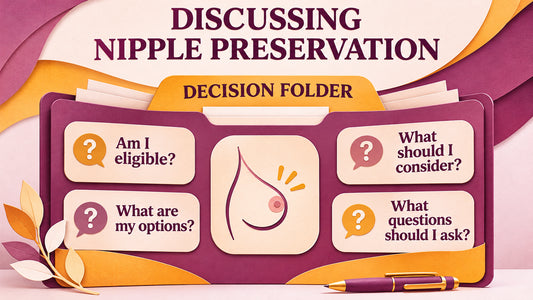
Useful questions include: Is the nipple or nearby skin involved? How will you test the nipple margin? What would make you remove it during or after surgery? How do radiation and reconstruction fit together? What should I expect about sensation, scars and additional operations?
Professor Fengxi Su’s profile describes breast-conserving surgery, oncoplastic/reconstructive planning, lymph-node management and margin assessment. These are connected decisions: preserving appearance needs to fit the cancer operation and the overall treatment plan. Explore Professor Su’s clinical focus.
Su coauthored a 2017 study of 2,440 nipple-sparing mastectomy patients in the US SEER registry. The findings supported its use in selected patients, but the study lacked local-recurrence and nipple-margin information, among other details. It was an observational database analysis, not a promise about your result or a report of his personal patients. Read the original study and limitations.
To explore a consultation, contact medChina with your main question. The team can explain availability and how to submit reports through an appropriate channel. Keep your existing treatment appointments while arrangements are discussed.
Sources and editorial information
Prepared by the medChina Editorial Team. Sources checked November 4, 2026. This patient guide is not an individual assessment or a medical review by Professor Su.
References: Mayo Clinic: nipple-sparing mastectomy (2026); Ontario Health reconstruction guideline (2025); ASBrS mastectomy resource guide (2018); NCI: reconstruction after mastectomy; Li et al., PLOS ONE (2017), with Fengxi Su; BayCare program announcement (October 2026); NCI: choosing breast surgery.
Illustrative scenes, not records of actual patient care.
Use this information to prepare questions for your treating team. Eligibility depends on your own cancer findings, health and preferences.