
Why Do I Need Hepatitis B Tests Before Breast Cancer Chemotherapy?

PATIENT GUIDE
Why check for hepatitis B before breast cancer chemotherapy?
The test helps the team prevent an existing hepatitis B infection from becoming active again during cancer treatment. This is called reactivation. It can occur even when a person has not previously felt unwell or known about the infection.
ASCO recommends hepatitis B screening before, or at the start of, systemic anticancer therapy. Screening is part of treatment planning; a positive result calls for coordinated care, not an automatic conclusion that breast cancer treatment is impossible. ASCO screening and management guidance.
Tell your oncology team about previous hepatitis B results, vaccination records and any antiviral medicine you already take. Bring copies where possible, because a remembered result such as positive or immune may not identify which test was performed.
Do not cancel or postpone treatment yourself while trying to interpret a laboratory report. Ask the team to explain what needs to happen next and who will coordinate it.
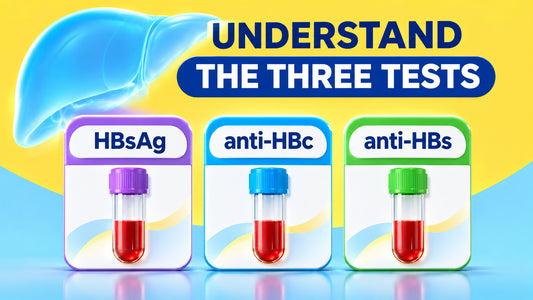
What do the three screening tests tell the team?
The screening panel includes HBsAg, anti-HBc and anti-HBs. These markers are read together to distinguish current infection, past exposure, immunity from vaccination and susceptibility. The illustration shows the test names, not a patient’s results. CDC: testing and interpretation.
HBsAg is the hepatitis B surface antigen. Anti-HBc is an antibody to the viral core and can indicate previous or ongoing infection. Anti-HBs is an antibody to the surface antigen and may reflect immunity.
One positive antibody is not the same as a positive surface antigen. Some combinations require further investigation, so avoid assigning yourself a diagnosis from a single highlighted laboratory value.
Ask for a plain-language explanation: Do I have current infection, evidence of past infection, vaccine-related immunity or a need for vaccination? What additional tests, if any, are needed before the plan is finalised?

How does Professor Su’s research relate to prevention?
Fengxi Su coauthored a 2011 prospective randomized study involving 42 breast cancer patients who were positive for hepatitis B surface antigen and receiving chemotherapy. Twenty-one received preventive lamivudine and 21 did not. Long and colleagues, 2011.
The study reported fewer reactivations in the preventive-treatment group. It helped establish the importance of prevention in this specific breast cancer setting, rather than waiting for liver problems to appear.
It was a small, single-centre trial using an older antiviral strategy. It does not mean every person with any positive hepatitis B test needs lamivudine, or that its results predict an individual’s risk today.
Modern drug selection should follow current clinical guidance and the patient’s circumstances. The accompanying scene is an imagined research discussion, not a record of Professor Su prescribing treatment.
Will I need antiviral medicine or monitoring?
For chronic hepatitis B during systemic anticancer treatment, ASCO recommends antiviral prevention. For past infection, the choice between prevention and monitoring depends on the cancer treatment and reactivation risk. Hormonal therapy alone is a different setting and usually follows standard hepatitis B care. ASCO: different infection and treatment settings.
Current eviQ guidance favours medicines with a high barrier to resistance, such as entecavir or tenofovir, over lamivudine for HBsAg-positive patients needing prophylaxis. The prescribing clinician selects the suitable medicine; this article does not provide a drug or dose recommendation. eviQ: antiviral prevention.
If monitoring is chosen, ask which blood tests are planned, when they are due and who checks the results. A monitoring plan means active follow-up, not simply waiting for symptoms.
Let both teams know about all medicines and supplements. Ask whom to contact if you miss a dose or cannot obtain a refill, rather than improvising a replacement.

Does follow-up finish with my last chemotherapy dose?
No. Hepatitis B management may continue after cancer treatment. ASCO recommends prevention during systemic treatment and for at least 12 months afterward for chronic HBV; some people need longer-term therapy for their liver condition. ASCO: care after cancer treatment.
The exact stop date and monitoring schedule are individual decisions. Guidance differs across clinical settings. Do not stop an antiviral just because chemotherapy has finished or you feel well. eviQ: individualised follow-up.
Many people with hepatitis B have no symptoms. Report new yellowing of the eyes or skin, dark urine, nausea or other concerning changes to your team; these symptoms have several possible causes and need assessment. CDC: hepatitis B symptoms.
Before finishing chemotherapy, request a handover covering your current medicine, pending tests, next appointment and named contact. Keep it with your breast cancer treatment summary.
Sources and editorial notes
Prepared by medChina Editorial Team. Sources checked 18 November 2026. General patient education; this article was not medically reviewed by Professor Su.
Cancer-specific screening and management guidance. ASCO provisional clinical opinion, 2020.
Test interpretation and patient information. CDC hepatitis B testing.
Practical prevention guidance, including drug selection and follow-up. eviQ hepatitis B prophylaxis.
Historical breast cancer trial: 42 HBsAg-positive patients, single-centre randomized design. PMID 21445574.
Illustrative scenes, not records of actual patient care.