
When Can I Drive After Breast Cancer Surgery?
PATIENT GUIDE
Is there a safe number of days to wait?
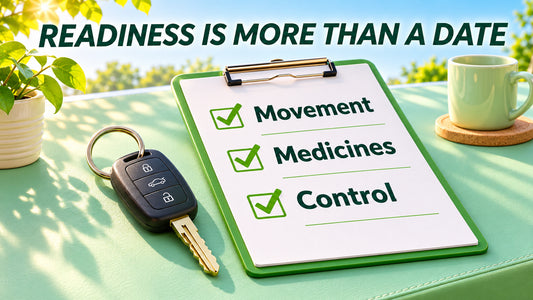
There is no single day when everyone can safely drive after breast cancer surgery. You need to recover enough to control the vehicle, wear the seatbelt comfortably and respond safely in an emergency, without medicines impairing you. Follow your own surgical team's restrictions.
After mastectomy, NHS guidance says to wait until wounds have healed and wearing a seatbelt is comfortable. Being discharged from hospital, having stitches removed or feeling better at rest is not itself driving clearance. NHS: recovering from mastectomy.
This guide is for adults planning a return to driving after lumpectomy or mastectomy. Reconstruction, complications and other health conditions may require a different plan. It does not assess your fitness to drive or replace local licensing and insurance requirements.

What about pain medicines and alertness?
Ask your pharmacist or prescriber to review every medicine you take, including over-the-counter products. If a medicine makes you sleepy, dizzy, less attentive or slower to react, do not drive. Do not skip prescribed pain treatment simply to get behind the wheel; ask about safe alternatives and transport.
In England, Scotland and Wales, driving while impaired by a medicine is illegal even when the medicine was prescribed. GOV.UK advises discussing uncertainty with a healthcare professional. Rules elsewhere differ, so check the authority where you will drive. GOV.UK: medicines and driving.
MSK's mastectomy instructions specifically advise against driving while taking prescription pain medicine because of drowsiness. Its driving criteria also include drain removal, restored movement and comfortable steering. These are clinical instructions for that pathway, not a universal countdown. MSK: driving after mastectomy.
How does my operation affect the discussion?
Tell your team whether you had breast-conserving surgery, mastectomy, underarm surgery or reconstruction. Ask which restrictions still apply to steering, reaching and sudden movements, and when they will be reviewed.
Professor Fengxi Su coauthored the 2019 editorial In pursuit of a flawless aphrodite: paving the way to scarless oncoplastic breast surgery. It discusses breast reshaping and scar-related surgical approaches. It does not study driving readiness or establish a quicker return to driving. Read the original editorial.
When discussing surgery with Professor Su's team, ask for an operation-specific recovery plan and the contact responsible for postoperative questions. A smaller visible scar should not be treated as proof that all underlying tissue has healed.
What should I be able to do before returning?
Royal United Hospitals Bath advises waiting until you can fully control the vehicle, wear a seatbelt comfortably and confidently perform an emergency stop. Its leaflet gives two to four weeks as an average period without driving, while stressing control and medication effects. An average is not individual permission. RUH Bath: day-case breast surgery recovery, September 2026.
Discuss any pain with reaching, turning or using the controls. Ask your team how readiness should be assessed; do not perform a risky road test to prove you can manage. If you cannot use the normal seatbelt comfortably, seek advice rather than avoiding it or improvising a different restraint arrangement.
Ask your insurer what information it needs after surgery. Macmillan advises contacting your car insurance company about your operation. If driving is part of your job, also discuss the specific demands with your team and employer. Macmillan: after breast cancer surgery.
How can I get to appointments while I wait?
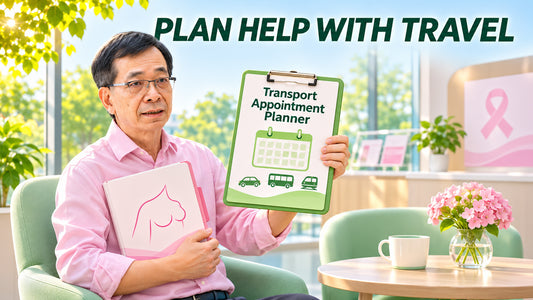
Plan a lift from a trusted adult, a taxi with appropriate support, or locally available patient transport. Ask the hospital what help you may qualify for; do not assume transport is automatically provided. Arrange a backup for wound checks and other planned treatment.
Driving yourself is different from travelling as a passenger. MSK allows passenger travel after hospital discharge in its mastectomy pathway, but ask your own team about your journey, particularly after reconstruction or if you have drains. Do not assume advice about a short ride covers a long journey. MSK: passenger travel.
For breast cancer treatment in China, medChina can coordinate enquiries about Professor Su's services. Clinical fitness for driving or travel must be assessed by your treating team. The initial contact form is for enquiries; the coordination team will separately explain how to submit records.
When do symptoms need medical help instead of a journey?
After mastectomy, sudden pain or swelling, wound bleeding or sudden loss of arm sensation needs urgent medical advice. Severe breathing difficulty, chest or upper-back pain, a very fast heartbeat or fainting can signal a serious problem. Seek local emergency help; do not drive yourself to emergency care. NHS: urgent and emergency symptoms.
At your review, bring the operation details, medicine list, current wound or drain concerns and a description of the driving you need to do. Ask: “What still prevents me from driving?” “Who should reassess me?” “What transport should I use meanwhile?” Keep scheduled treatment and follow-up appointments.
References: NHS — Mastectomy (reviewed May 8, 2025); RUH Bath — Day-case breast surgery (September 2026); MSK — About Your Mastectomy; GOV.UK — Drugs and driving; Zhu et al., including Fengxi Su — Oncoplastic surgery editorial (December 4, 2019); Macmillan — Having an operation for breast cancer.
Prepared by the medChina Editorial Team. Sources checked November 18, 2026. Educational information supports, but does not replace, individual clinical advice.
Illustrative scenes, not records of actual patient care.