
Arm and Shoulder Function After Breast Surgery | Professor Fengxi Su

01 · Understand the question
What should I know about arm and shoulder recovery?
Tell your care team about new swelling, tight cords, numbness or difficulty moving your arm. These symptoms can have different causes. An assessment helps identify what is happening and what support is appropriate.
- Mention any shoulder or arm difficulties you had before surgery.
- Ask whom to contact for individual recovery advice.
Are tight cords and arm swelling the same problem?
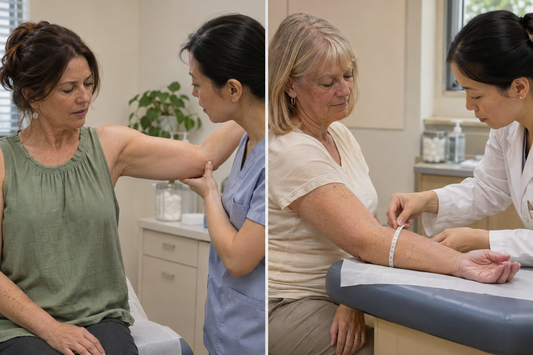
A tight cord under the skin can occur with axillary web syndrome, or AWS. Lymphoedema involves a build-up of lymph fluid. They are different problems, and symptoms should be assessed rather than diagnosed from a photograph.
- Cording may pull or restrict movement.
- Swelling or heaviness also needs attention.
Two separate assessments: checking arm movement and tightness, and measuring the arm.
What did Professor Su’s case report describe?
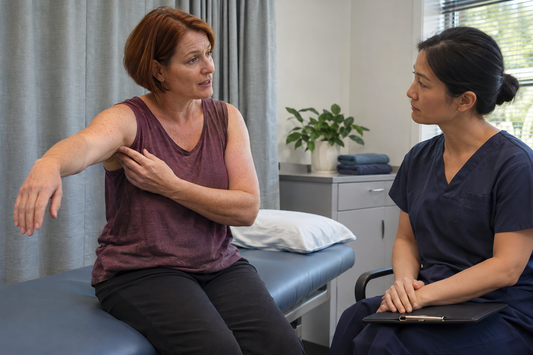
The report described one woman who developed painful cords and restricted arm movement after another breast operation to remove more tissue at the cut edges. No further underarm surgery was performed at that second operation. This shows a possible presentation of axillary web syndrome, not how often it happens.
- Report a new cord or pulling sensation.
- Explain when it began and how it affects movement.

02 · Weigh the details
Does the report show how quickly I will recover?
In the reported case of painful underarm cording, the woman improved over several weeks but still had numbness and tightness at follow-up. Several treatments were used together, so the report cannot show which caused improvement or promise a recovery deadline.
- Recovery needs individual review.
- The case report is not a medicine or exercise prescription.

How can I get help with movement?
Ask whether a physiotherapy or occupational therapy assessment would help. Guidance should fit your operation, healing and symptoms. Current professional guidance recognises rehabilitation for shoulder difficulties and axillary cording.
- Describe the movements that hurt or feel restricted.
- Follow the plan agreed with your care team.
Which changes should I report?
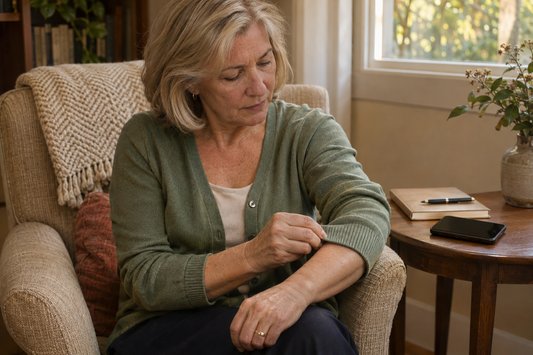
Contact your team about new swelling, heaviness, tightness or changes in movement. Swelling may have more than one cause, so an examination can be needed to work out what is happening.
- Note where and when the change started.
- Explain whether it is worsening or affecting daily tasks.

When should I seek help promptly?
Contact your treating team right away for fever or signs of infection, such as new redness, warmth or increasing pain in a swollen area. Do not wait for every sign to appear or use a routine website enquiry.
- Use your treating team’s urgent contact instructions.
- Do not rely on an online consultation form for urgent symptoms.

Can a mapping technique guarantee protection?
Professor Su’s arm-drainage mapping study removed and examined all identified arm-draining and sentinel nodes. It did not test whether keeping those nodes in place prevents lymphoedema, which is swelling caused by lymph fluid build-up. Ask what benefits, risks and evidence apply to any technique proposed for you.
- Protecting function must also respect cancer safety.
- No operation should be presented as zero risk.
Discuss the evidence and its limits with your care team.

03 · Prepare your next step
What should my follow-up plan include?
Know who to contact about symptoms, when the next review is, and how to access rehabilitation if needed. Keep a short record of changes and of activities that are becoming easier or harder.
- Ask when the recovery plan should be reassessed.
- Bring symptom notes to your next appointment.
Evidence and Further Reading
This educational guide draws on publications coauthored by Professor Fengxi Su. Additional current guidance is identified separately. The explanations support discussion with your care team and do not determine individual treatment.
- Axillary web syndrome following secondary breast-conserving surgery: a case report. (2013). Coauthored by Professor Su.
- Safety study of axillary reverse mapping in the surgical treatment for breast cancer patients. (2011). Coauthored by Professor Su.
- ASBrS Resource Guide: Technical Considerations for Axillary Surgery in Breast Cancer Patients (2026). Additional guidance; not authored by Professor Su.
- NCI: Lymphedema. Additional guidance; not authored by Professor Su.
Related guides
Use the contact form to ask about consultation arrangements. Sending a message does not confirm an appointment. The form is not an emergency service.