
Brain Health China
,
Brain MRI China
,
CT Brain Scan Review
,
medChina Global
,
Neuroimaging Review
,
Neurological Second Opinion
,
Neurology China
,
Stroke Evaluation China
Stroke & Neurology Evaluation in China for U.S. Patients: Brain MRI, Neuroimaging & Second Opinion Guide
Neurological conditions such as stroke, brain tumors, epilepsy, and neurodegenerative diseases are among the most complex challenges in modern medicine. Early and accurate diagnosis is essential for effective treatment planning and long-term outcomes.
Stroke and neurology evaluation in China may be considered by selected U.S. patients seeking advanced neuroimaging interpretation, diagnostic confirmation, or second opinion review for complex brain and nervous system conditions.
China’s major neurological centers use advanced MRI, CT, and functional imaging technologies to evaluate brain structure and function. However, neurological interpretation is highly specialized and must always be correlated with clinical findings. No diagnostic evaluation guarantees treatment success or neurological recovery.
This article explains how neurological evaluation works, when it may be useful, what technologies are used, and how medChina.global supports structured international neurology review pathways.
Explore Neurology Evaluation Options in China
What Is Neurology Evaluation?
Neurology evaluation refers to the diagnostic assessment of the brain, spinal cord, and nervous system to identify structural, functional, or degenerative conditions.
It typically involves a combination of imaging, clinical examination, and neurological testing.
Common conditions evaluated include:
- Stroke and transient ischemic attacks (TIA)
- Brain tumors and lesions
- Epilepsy and seizure disorders
- Neurodegenerative diseases such as Parkinson’s and Alzheimer’s
- Spinal cord and nerve disorders
Why U.S. Patients Seek Neurology Second Opinions in China
Neurological conditions often involve complex imaging findings and variable clinical presentations. Some patients seek additional review when diagnoses are unclear or when treatment decisions are uncertain.
U.S. patients may consider neurology evaluation in China for several reasons:
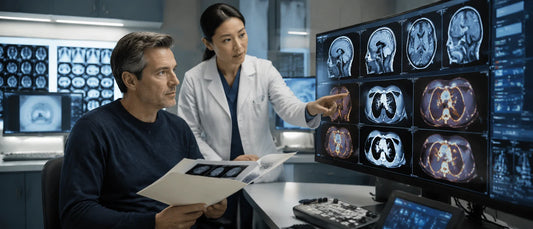
- Second interpretation of brain MRI or CT scans
- Clarification of stroke diagnosis or severity
- Evaluation of brain lesions or tumors
- Review of epilepsy or seizure disorder diagnosis
- Multidisciplinary neurological case review
However, second opinions do not guarantee changes in diagnosis or treatment outcomes.
Key Diagnostic Tools in Neurology
Neurological evaluation relies heavily on imaging and functional testing to understand brain structure and activity.
1. Brain MRI
High-resolution imaging used to detect tumors, stroke damage, and structural abnormalities.
2. CT Brain Scan
Rapid imaging tool often used in emergency stroke assessment.
3. Functional MRI (fMRI)
Evaluates brain activity and functional connectivity.
4. EEG (Electroencephalogram)
Measures electrical activity in the brain, commonly used for seizure disorders.
5. Neurovascular Imaging
Assesses blood flow and vascular integrity in the brain.
Stroke Evaluation and Time Sensitivity
Stroke is a time-sensitive medical emergency. Rapid diagnosis and treatment are critical to reducing long-term neurological damage.
Evaluation typically includes immediate CT or MRI imaging to determine whether the stroke is ischemic or hemorrhagic.
It is important to emphasize that emergency stroke care should always be conducted locally and immediately.
Limitations of Neurology Evaluation
Neurological diagnosis can be complex and may require repeated imaging or longitudinal monitoring.
- Imaging findings may be non-specific in early stages
- Symptoms may overlap across multiple conditions
- Second opinions may not change diagnosis
- Clinical correlation is always required
Neurology evaluation is a diagnostic tool, not a standalone treatment solution.
Multidisciplinary Neurology Review
Complex neurological cases often require collaboration between neurologists, radiologists, neurosurgeons, and rehabilitation specialists.
This multidisciplinary approach helps ensure that imaging findings and clinical symptoms are interpreted in a comprehensive context.
Submit Brain Imaging for Expert Review
How medChina.global Supports Patients
medChina.global assists U.S. patients by coordinating structured neurological second opinion reviews in China.
Support may include:
- Medical record and imaging organization
- Neurology specialist matching
- Brain MRI and CT interpretation support
- Multidisciplinary neurological review coordination
- International case management guidance
Important Considerations Before Evaluation
Patients should ensure that all neurological imaging and clinical records are complete before submitting a case for review.
In suspected stroke cases, immediate emergency care must take priority over second opinion processes.
Conclusion
Stroke and neurology evaluation in China may provide additional insights for selected U.S. patients with complex neurological conditions. However, interpretation depends on clinical context and specialist expertise.
Neurological assessment is a supportive diagnostic process, not a guarantee of treatment outcome.
Explore Neurology Consultation Options in China
Disclaimer: This article is for informational purposes only and does not constitute medical advice, diagnosis, or treatment. Neurological evaluation outcomes vary depending on clinical condition and imaging findings. Patients should consult qualified healthcare professionals before making medical decisions.
Tags:
Previous
Advanced Imaging Diagnosis in China for U.S. Patients: MRI, CT Scan & PET-CT Second Opinion Guide
Next
Rare Disease Diagnosis in China for U.S. Patients: Advanced Testing, Genetic Screening & Complex Case Evaluation