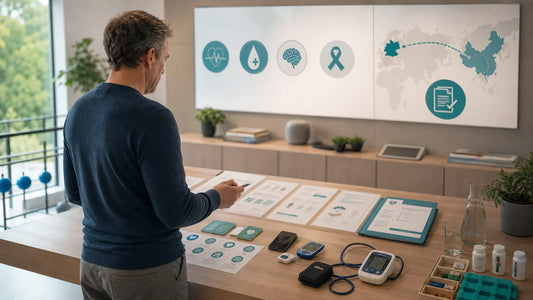

Cancer Second Opinion Limitations in Germany: When Patients Need a More Structured Case Review
Cancer second opinion in Germany can be valuable for patients who want to confirm a diagnosis, understand a treatment recommendation or ask whether another medical direction should be considered. However, a second opinion does not always answer every question. Some patients still feel uncertain after receiving one because the review was brief, records were incomplete, or pathology, imaging and molecular findings were not fully connected.
This does not mean that German oncology doctors are not capable. Cancer care is complex, and many patients receive careful treatment in Germany. The challenge is that a second opinion is only as useful as the information available for review. If the case file is incomplete, scattered or not presented with a clear question, the second opinion may remain general.
This article explains why cancer second opinions may feel limited, what German patients should prepare before requesting another review, and how medChina.global can help organize oncology records, structure questions and explore China-related cancer case review in a responsible way.
Why a cancer second opinion may still feel incomplete
Many patients expect a second opinion to provide a clear answer: continue this treatment, change to that treatment, operate now, wait, or explore another option. In reality, cancer decisions often depend on multiple layers of information. If even one layer is missing, the review may be cautious or incomplete.
A cancer case may require review of diagnosis, staging, imaging, pathology, molecular markers, previous treatment response, current physical condition, side effects, organ function and patient goals. A short consultation may not be enough to connect all these elements.
Common reasons a second opinion may feel limited include:
- the patient only submits a diagnosis name, not full records,
- imaging reports are available but original scan files are missing,
- pathology results are incomplete or difficult to compare,
- molecular testing has not been performed or is not clearly explained,
- previous treatment response is not summarized,
- the patient's current physical condition is not documented,
- the review question is too broad or unclear,
- the second opinion does not include multidisciplinary context.
The difference between a quick opinion and a structured case review
A quick second opinion may answer one immediate question. A structured case review goes deeper. It organizes the patient's cancer journey into a timeline, checks whether key information is available, identifies missing records and frames the question for specialist review.
For example, a quick question may be: "Is this treatment good?" A structured review question may be: "Given this cancer type, stage, pathology, molecular test result, previous chemotherapy response and current health condition, what medically reasonable directions should be discussed next?"
The second question is more useful because it gives the reviewer context. Cancer decisions are rarely made from one report alone. The more organized the case, the more meaningful the review can be.
Where cancer second opinions can become limited
Diagnosis and pathology uncertainty
Pathology is central to cancer care. If the pathology report is unclear, incomplete or not aligned with imaging and clinical findings, treatment decisions may remain uncertain. Some patients may need pathology re-review or additional testing before another treatment direction can be discussed.
Imaging scattered across several providers
Cancer staging and treatment response often depend on imaging over time. If CT, MRI, PET-CT or ultrasound results are scattered across different hospitals or only written reports are available, it may be difficult to understand progression, stability or response.
Molecular testing not integrated
Molecular or biomarker results may influence whether targeted therapy, immunotherapy or clinical discussion is relevant. However, a test result alone does not guarantee a treatment option. It must be interpreted together with cancer type, stage, previous treatment and patient condition.
Previous treatments not summarized
Patients who have already received surgery, chemotherapy, radiotherapy, targeted therapy or immunotherapy need a clear treatment timeline. Without it, a reviewer may not know what has already been tried, what worked, what failed and what side effects occurred.
Patient goals not clearly stated
Some patients want aggressive treatment, while others prioritize symptom relief, travel safety, family time or quality of life. A second opinion should understand the patient's goals, not only the tumour biology.
When German cancer patients may seek another review
Patients may consider another case review when the first second opinion does not answer the practical questions they face. This is especially common when the case is advanced, rare, recurrent, treatment-resistant or medically complex.
Another structured review may be useful when:
- the diagnosis has changed over time,
- the patient has received different treatment recommendations,
- standard treatment options have already been discussed,
- molecular test results raise new questions,
- imaging and symptoms do not seem to match,
- the patient wants to understand treatment sequence,
- rehabilitation or supportive care has not been clearly planned,
- the family wants an international perspective before making decisions.
Another review does not guarantee a new treatment option. It may confirm the current plan, explain why certain options are not suitable, or identify missing records that should be completed first.
China as an additional oncology case review pathway
China oncology case review for German patients refers to structured preparation and review of existing cancer records, including diagnosis, pathology, imaging, molecular testing, treatment history and patient questions. It may help selected patients understand whether relevant Chinese oncology departments, precision medicine resources, rehabilitation services or international patient pathways may be worth discussing.
This is not emergency care, not a cure promise and not a replacement for German oncologists. It is a planned supplementary pathway for patients who want another structured medical perspective after organizing their case properly.
China-related cancer case review may be considered for:
- complex oncology second opinion questions,
- advanced or recurrent cancer case review,
- pathology and imaging integration,
- precision oncology and biomarker interpretation questions,
- treatment sequence discussion,
- post-treatment rehabilitation and supportive care planning,
- international hospital matching for suitable planned cases.
Suitability depends on diagnosis, stage, records, previous treatment, medical stability, performance status, hospital availability, doctor review, patient eligibility and applicable regulations.
What records are needed for a meaningful cancer review?
A cancer review should not rely on a single summary or a patient's memory. The most useful reviews are based on complete and organized records.
Important records include:
- current oncology doctor letter,
- confirmed diagnosis and tumour stage,
- pathology report and biopsy details,
- immunohistochemistry results if available,
- molecular or biomarker testing reports if available,
- CT, MRI, PET-CT or ultrasound reports,
- original imaging files if available,
- surgery reports and discharge summaries,
- chemotherapy, radiotherapy, targeted therapy or immunotherapy timeline,
- treatment response and progression notes,
- side effects and current physical condition,
- current medication list,
- patient and family questions.
A short timeline is especially useful. It should explain when the cancer was diagnosed, what treatments were given, how the disease responded, what changed recently and what decision is now being considered.
How medChina.global supports German cancer patients
medChina.global is not a hospital, oncology clinic or doctor group. It does not diagnose cancer, provide treatment, prescribe medication or guarantee outcomes. Its role is to help German patients prepare and coordinate the non-clinical steps needed for responsible cross-border medical review.
Support may include:
- Case understanding: clarifying the diagnosis, current treatment question and patient goals.
- Record organization: arranging pathology, imaging, molecular testing and treatment history into a clear timeline.
- Medical translation: preparing key oncology information for cross-border communication.
- Review-question preparation: helping patients frame focused questions for specialist review.
- Hospital matching: identifying potentially relevant Chinese oncology departments or international patient services.
- Second opinion coordination: supporting planned review when appropriate.
- Non-clinical coordination: assisting with documents, appointments, interpretation and travel-related preparation if a China pathway becomes relevant.
Step-by-step: How to improve the value of a cancer second opinion
Step 1: Define the exact question
Patients should clarify whether the question is about diagnosis, staging, treatment sequence, molecular testing, side effects, rehabilitation or future options.
Step 2: Build a cancer timeline
The timeline should show diagnosis date, treatment steps, response, progression, complications and the current decision point.
Step 3: Organize pathology and imaging
Pathology, molecular reports and imaging should be complete and clearly labelled. Original image files may be useful when available.
Step 4: Identify missing information
If pathology, molecular testing, imaging or treatment response data is missing, the patient should note this before expecting a clear answer.
Step 5: Request structured review
medChina.global can help prepare the case and explore whether a China-related oncology review may be relevant.
Step 6: Discuss all findings with qualified doctors
Any additional opinion should be discussed with qualified healthcare professionals before treatment decisions are made.
What patients should avoid
Cancer patients and families may feel pressure to act quickly. However, repeated opinions without proper records can create more confusion instead of clarity.
- Do not seek multiple opinions without organizing records first.
- Do not expect a new treatment option from every review.
- Do not stop current treatment without medical advice.
- Do not trust providers that promise cure or guaranteed response.
- Do not travel before medical stability and goals are assessed.
- Do not send sensitive oncology records to unclear organizations.
FAQ: Cancer second opinion limitations
Why can a cancer second opinion feel incomplete?
It may feel incomplete if records are missing, pathology is unclear, imaging is scattered, molecular testing is not available or the review question is too broad.
Does a second opinion always provide a new treatment option?
No. A second opinion may confirm the current plan, identify missing information or explain why certain options are not suitable.
What is the difference between second opinion and structured case review?
A second opinion may answer a specific question. A structured case review organizes diagnosis, imaging, pathology, molecular data, treatment history and patient goals before asking focused questions.
Can China be considered for cancer case review?
In selected planned cases, Chinese oncology resources may be reviewed. Suitability depends on diagnosis, stage, records, medical stability, doctor assessment and patient eligibility.
Does medChina.global provide cancer treatment?
No. medChina.global is not an oncology clinic. It helps with record preparation, hospital matching, review coordination and non-clinical support.
Can medChina.global guarantee new options or outcomes?
No. medChina.global does not guarantee treatment access, new options, faster care, cure or medical outcomes.
Fazit: A useful cancer second opinion begins with complete records
Cancer second opinions in Germany can be helpful, but they may still feel limited when records are incomplete, questions are unclear or pathology, imaging and molecular information have not been integrated. For patients and families, the goal should not be to collect more opinions randomly, but to build a structured case file that allows meaningful review.
For selected German cancer patients, China may offer an additional planned oncology case review pathway through record preparation, second opinion coordination, hospital matching and international patient support. medChina.global helps prepare this process carefully and realistically, without replacing German oncologists or promising treatment outcomes.
This article is for informational purposes only and does not replace professional medical advice, diagnosis, emergency care or cancer treatment. medChina.global is not a hospital, oncology clinic or doctor group and does not guarantee treatment access, faster care, new treatment options, cure, cost savings or medical outcomes. Patients should consult qualified healthcare professionals before making treatment, travel or medical decisions. In urgent, severe or worsening medical situations, patients should seek local medical care immediately. Suitability for cancer second opinions, oncology case review, precision oncology, targeted therapy, immunotherapy, rehabilitation, advanced medical resources or China-related medical pathways depends on individual diagnosis, stage, medical stability, doctor review, hospital availability, patient eligibility and applicable regulations.
Tags:
Previous
Insurance Restrictions and Treatment Delays in Germany: When Patients Explore Private Medical Options Abroad
Next
Lack of Precision Medicine Access in Germany: When Patients Consider International Case Review