
Imaging Review Abroad for Canadian Cancer Patients: How China-Based Second Opinions May Help
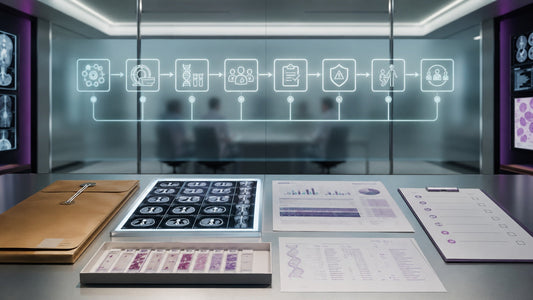
Imaging review abroad for Canadian cancer patients refers to having cancer-related imaging records reviewed by medical specialists outside Canada to better understand diagnosis, staging, tumour spread, treatment response, recurrence risk, surgery planning, radiation planning or oncology MDT decisions. Imaging review may be part of a second opinion, but it does not replace Canadian radiologists, oncologists or local cancer care.
Cancer imaging often includes CT, MRI, PET/CT, ultrasound, X-ray, mammography, bone scan or disease-specific imaging. These scans can help doctors understand where a tumour is located, whether cancer has spread, whether treatment is working and whether more testing is needed.
For selected Canadian patients, China may be considered when they want imaging reassessment, oncology second opinion, pathology-imaging correlation, multidisciplinary team review, surgical planning discussion, radiation planning questions or follow-up documentation. The safest first step is to organise both imaging reports and original imaging files before requesting review.
Why Imaging Review Matters in Cancer Care
Imaging is one of the key tools used to understand cancer. It may help identify tumour size, tumour location, lymph node involvement, organ spread, treatment response and possible recurrence. In many cancer cases, treatment decisions depend on how imaging findings match pathology, symptoms and lab results.
The Canadian Cancer Society explains that cancer tests and procedures may be used to diagnose cancer, identify the type of cancer, provide treatment and monitor whether treatment is working. PET scans, for example, detect areas of activity in the body and can help identify areas where cancer cells may be more active.
An imaging review may help clarify:
- Whether the tumour location and size are clearly described
- Whether lymph nodes or distant organs are involved
- Whether staging appears complete
- Whether new lesions need further evaluation
- Whether imaging findings match the pathology diagnosis
- Whether treatment response has been assessed clearly
- Whether surgery, radiation, interventional therapy or systemic treatment questions need further discussion
Imaging review does not guarantee a different diagnosis or treatment plan. Its value is in adding clarity to complex cancer decision-making.
When Canadian Patients May Consider Imaging Review Abroad
Canadian cancer patients may consider imaging review abroad when the imaging findings are complex, when the cancer stage is uncertain, or when major treatment decisions depend on scan interpretation.
Imaging review abroad may be considered when:
- The patient is seeking a cancer second opinion
- The cancer is newly diagnosed and staging is still being clarified
- There are possible metastases that require careful interpretation
- Surgery, radiation or interventional treatment is being considered
- The patient has recurrent or progressive disease
- There is disagreement or uncertainty between imaging and pathology
- The patient wants an oncology MDT review before making decisions
- The family wants more confidence before travel, treatment or major expense
Patients should not delay urgent treatment while waiting for international review unless this is discussed with qualified healthcare professionals.
Why China May Be Considered for Cancer Imaging Review
China may be considered by selected Canadian patients because of its large oncology departments, cancer specialty hospitals, imaging centres, interventional oncology teams, radiation oncology resources, international medical departments and multidisciplinary review pathways.
China-based imaging review may be relevant for patients exploring:
- Oncology second opinion
- CT, MRI or PET/CT reassessment
- Staging review
- Pathology and imaging correlation
- Surgery, radiation or interventional planning questions
- Liver, lung, bone, brain or lymph node metastasis review
- Oncology MDT discussion
- Follow-up documentation for continued discussion in Canada
China is not suitable for every patient or every imaging question. Suitability depends on the cancer type, available files, scan quality, urgency, medical stability, hospital process and physician assessment.
Which Imaging Records Should Canadian Patients Prepare?
For imaging review, written reports are useful, but original imaging files are often even more important. A report summarises findings, while original image files may allow specialists to review details directly.
Common Imaging Records Include:
- CT scan reports and DICOM image files
- MRI reports and original image files
- PET/CT reports and original image files
- Ultrasound reports
- Mammography and breast MRI reports, if relevant
- Bone scan reports, if relevant
- Radiation planning imaging, if available
- Prior comparison scans to show change over time
- Post-treatment scans to evaluate response or recurrence
Patients should ask imaging providers how to obtain original imaging files, often in DICOM format. If files are provided on a disc, USB drive or download link, they should be preserved carefully and not edited.
Imaging Review by Cancer Type
Lung Cancer
Lung cancer imaging may include chest CT, PET/CT, brain MRI or other staging scans. Imaging review may help assess tumour location, lymph nodes, metastases and whether surgery, radiation, systemic therapy or MDT discussion may be relevant.
Breast Cancer
Breast cancer imaging may include mammography, ultrasound, breast MRI, CT, bone scan or PET/CT depending on the case. Imaging review may help assess local disease, lymph nodes, metastatic questions, treatment response and surgery or radiation planning.
Colorectal Cancer
Colorectal cancer imaging may include CT, pelvic MRI for rectal cancer, liver MRI, PET/CT or ultrasound. Imaging review may be especially important when liver metastases, rectal cancer staging or recurrence questions are involved.
Liver Cancer
Liver cancer imaging often depends on high-quality CT or MRI. Imaging may help assess tumour number, size, vascular involvement, liver function context and whether surgery, ablation, TACE, radiation or systemic treatment questions should be reviewed.
Prostate Cancer
Prostate cancer imaging may include prostate MRI, bone scan, CT or PET-related imaging depending on the clinical situation. Imaging review may help clarify staging, recurrence questions or treatment planning.
Pathology and Imaging Should Be Reviewed Together
Imaging review is strongest when paired with pathology and clinical history. Imaging may show where disease appears to be, but pathology helps confirm what the disease is. Treatment history helps explain whether scan changes represent response, progression, inflammation or post-treatment effects.
A useful oncology review package usually includes:
- Diagnosis summary and timeline
- Pathology reports
- Imaging reports and original image files
- Staging information
- Biomarker or molecular testing reports, if available
- Prior treatment history
- Current symptoms and medications
- Specific questions for the reviewing team
Sending imaging alone without context may limit the quality of review.
How medChina.global Helps With Imaging Review Preparation
medChina.global helps Canadian cancer patients explore China-based imaging review and oncology second opinion pathways in a structured, non-emergency way. We are not a hospital and do not diagnose, treat or guarantee outcomes. Our role is to help patients prepare records, clarify questions, explore hospital directions and coordinate practical next steps where appropriate.
Step 1: Clarify the Imaging Question
The patient may want staging review, response assessment, recurrence review, metastasis clarification, surgery planning, radiation planning or MDT discussion.
Step 2: Organise Imaging and Reports
We help patients identify which reports and original image files may be important, and whether prior comparison scans should be included.
Step 3: Link Imaging With Pathology and Treatment History
Imaging findings should be reviewed together with pathology, biomarkers, prior treatments and current symptoms whenever possible.
Step 4: Match the Case With a China Oncology Direction
The case may be relevant to radiology review, medical oncology, surgical oncology, radiation oncology, interventional oncology, cancer specialty hospitals, international medical departments or MDT pathways.
Questions to Ask Before Seeking Imaging Review Abroad
- What exact imaging question do I want answered?
- Do I have both reports and original image files?
- Are prior comparison scans available?
- Does imaging need to be reviewed together with pathology?
- Is staging complete?
- Would imaging review affect surgery, radiation or systemic treatment questions?
- Could international review delay urgent treatment?
- How will the imaging review be shared with my Canadian oncology team?
- What follow-up imaging may be needed after treatment?
What Imaging Review Abroad Cannot Promise
Patients should approach imaging review with realistic expectations. A China-based imaging review cannot guarantee:
- A changed diagnosis
- A cure
- Improved survival
- A different treatment plan
- Access to specific treatment
- Hospital acceptance or doctor availability
- Replacement of Canadian oncology care
Patients should not stop, delay or change cancer treatment without advice from qualified healthcare professionals.
FAQ: Imaging Review Abroad for Canadian Cancer Patients
Can Canadian cancer patients request imaging review in China?
Selected patients may explore China-based imaging review or oncology second opinion depending on cancer type, image quality, available records, hospital process and medical suitability.
Do I need original imaging files?
Original imaging files are often useful for review. Written reports are important, but original files may allow deeper assessment by imaging or oncology specialists.
What is DICOM?
DICOM is a common format used for medical imaging. If possible, patients should ask their imaging provider for original files in a usable medical imaging format.
Can imaging review change my cancer stage?
It may clarify staging questions in selected cases, but it cannot guarantee a different stage or treatment plan. Imaging should be interpreted with pathology and clinical history.
Do I need to travel to China first?
Not necessarily. Many patients begin with medical record organisation, imaging file preparation, case review and hospital matching before deciding whether travel is appropriate.
Can medChina.global guarantee treatment after imaging review?
No. medChina.global does not diagnose, treat or guarantee outcomes. We help Canadian patients explore China-based review pathways and prepare for responsible case assessment.
Final Thoughts
Imaging review abroad may help selected Canadian cancer patients gain more clarity about staging, tumour spread, treatment response, recurrence questions, surgery planning, radiation planning or MDT review. China may be one possible pathway for selected patients seeking additional oncology review.
The safest first step is to organise imaging reports, original image files, pathology records and a clear list of questions. medChina.global can help Canadian patients explore whether a China-based imaging review or oncology second opinion pathway may be relevant for their case.
This article is for informational purposes only and does not replace professional medical advice. Patients should consult qualified healthcare professionals before making treatment decisions.
Tags:
Previous
Pathology Review in China for Canadian Cancer Patients: Why It Matters Before Treatment Decisions
Next
Boao Lecheng Special-Permission Drugs for International Patients: What Canadian Patients Should Know