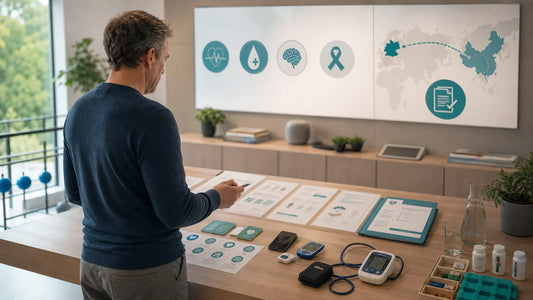

Limitations of Oncology Treatment Options in Germany: When Patients Seek Another Perspective
Oncology treatment limitations in Germany can become a major concern for patients and families when standard therapies appear limited, a treatment plan is difficult to understand, or doctors explain that no further standard option is currently recommended. This does not mean that German oncology care is poor. It means that cancer treatment is often complex, and some patients need more structured information before making the next decision.
For many cancer patients, the key question is not simply “Is there another treatment?” The more responsible question is: has the diagnosis been fully reviewed, is the tumour stage clear, are pathology and imaging complete, have molecular findings been interpreted, and is there a medically reasonable reason to seek an additional perspective?
This article explains why oncology treatment options can feel limited, what German patients can do before accepting uncertainty, and when a structured second opinion or international case review, including China-related oncology evaluation through medChina.global, may be worth considering.
Why oncology treatment options may feel limited
Cancer treatment is rarely a single decision. It often involves diagnosis confirmation, staging, pathology, imaging, molecular testing, patient fitness assessment and multidisciplinary planning. A treatment option may be limited not because nothing exists anywhere, but because a specific option may not be suitable for the individual patient, the tumour biology, the disease stage or the patient’s general condition.
Patients may feel that options are limited when:
- standard treatments have already been used,
- the cancer has progressed despite therapy,
- surgery is considered too risky or not feasible,
- the tumour type is rare or difficult to classify,
- molecular tests do not clearly indicate a targeted option,
- the patient has significant other medical conditions,
- different doctors explain the next step differently,
- the family does not understand why certain options were rejected.
These situations can be emotionally difficult. Patients may feel that time is running out or that they must make a decision quickly. However, careful medical review is still important. Fast action is not always the same as the right action.
Important questions before concluding that no options remain
Before patients assume that no further oncology pathway exists, they should clarify what exactly has been reviewed. Sometimes the issue is not the absence of all options, but missing information, incomplete documentation or unclear communication.
Helpful questions include:
- Is the diagnosis fully confirmed by pathology?
- Is the cancer stage clearly documented?
- Are the latest CT, MRI or PET-CT images available for review?
- Have molecular tests, biomarkers or genetic findings been considered?
- Which treatments have already been tried, and what was the response?
- Which options were rejected, and why?
- Is the goal treatment, disease control, symptom relief, rehabilitation or quality of life?
- Would a tumour board or multidisciplinary review add clarity?
These questions can help patients move from emotional uncertainty to a more structured discussion with qualified medical professionals.
When a second oncology opinion may be useful
A second opinion can be useful when a cancer treatment decision is complex, especially if the patient is facing surgery, systemic therapy, immunotherapy, targeted therapy, radiotherapy, palliative planning or a statement that no further standard option is recommended.
An oncology second opinion may help clarify:
- whether the diagnosis and stage are well supported,
- whether additional imaging or pathology review is needed,
- whether molecular testing has been sufficiently interpreted,
- whether the current treatment plan is consistent with the case details,
- whether rehabilitation or supportive care should be integrated earlier,
- whether additional international resources are worth reviewing.
A second opinion does not guarantee a new treatment recommendation. Sometimes it confirms the existing plan. Sometimes it identifies missing records or questions that should be clarified before the next step. Both outcomes can be valuable.
Precision medicine and molecular review
Precision medicine can be relevant when a tumour has molecular features that may influence treatment decisions. This may include genetic alterations, biomarkers, receptor status, immunotherapy markers or other tumour-specific information. However, molecular findings do not automatically lead to a treatment option.
Patients should understand that precision oncology is not a promise. It is a method of reviewing tumour biology more carefully. Whether a targeted therapy, immunotherapy or additional test is appropriate depends on the full case context.
For a precision medicine review, useful documents may include:
- pathology report,
- immunohistochemistry results,
- genetic or molecular testing reports,
- biomarker reports,
- previous treatment history,
- latest imaging and disease status,
- doctor letters explaining the current recommendation.
China as an additional oncology perspective
Oncology case review in China for German patients refers to the structured review of existing cancer records, imaging, pathology, molecular findings and treatment questions by relevant Chinese medical resources. It does not replace emergency care, German oncology treatment or the responsibility of the patient’s treating doctors.
For selected German patients, China may be considered when they need an additional medical perspective, specialist matching, precision oncology review, rehabilitation planning, or evaluation of whether China-related medical resources may be relevant to the case.
China-related oncology review may be considered for:
- complex or advanced cancer cases,
- unclear pathology or imaging findings,
- questions about molecular testing or precision oncology,
- cases where standard options appear limited,
- rehabilitation and supportive care planning,
- Boao-Lecheng-related questions about advanced medicines or medical devices,
- international hospital matching and case coordination.
China is not automatically suitable for every patient. Suitability depends on diagnosis, stage, previous treatments, patient condition, available records, hospital review, patient eligibility and applicable regulations.
Boao Lecheng and advanced medical resource questions
Some German cancer patients may ask whether Boao Lecheng-related medical resources could be relevant to their case. This type of question requires special caution. Advanced medicines or medical devices may only be considered when they are medically suitable, available through an appropriate institution, reviewed by qualified doctors and allowed under the applicable regulatory framework.
Patients should not assume that an innovative option is automatically better or available. The first step is always a case review. Important questions include:
- Does the diagnosis match the potential medical resource?
- Has the patient already received standard therapies?
- Are molecular markers or biomarkers relevant?
- Is the patient medically fit for the proposed pathway?
- Can a qualified hospital review the case?
- What are the limitations, risks and follow-up requirements?
medChina.global can help patients understand whether such questions are worth preparing for further medical evaluation, but it does not guarantee access, suitability or outcomes.
Which records are essential for oncology case review?
An oncology case cannot be responsibly reviewed with only a diagnosis name. Doctors need to understand the full medical story. German patients should prepare records carefully and chronologically.
Important records include:
- current oncology doctor letter,
- initial diagnosis report,
- pathology report and immunohistochemistry,
- CT, MRI, PET-CT or ultrasound reports,
- original imaging files if available,
- laboratory values and tumour markers,
- molecular testing or gene panel reports,
- surgery, chemotherapy, radiotherapy, immunotherapy or targeted therapy history,
- information on treatment response and side effects,
- medication list and other medical conditions,
- specific questions from the patient or family.
A short case timeline is also useful: when the diagnosis was made, what treatments were given, what changed, what doctors currently recommend and what decision the patient is facing now.
How medChina.global supports German oncology patients
medChina.global is not a hospital, not a doctor group and not a substitute for German oncology care. Its role is to help German patients structure medical information, understand potential China-related pathways and coordinate non-clinical preparation for international case review.
Support may include:
- Case understanding: identifying the main medical question and decision point.
- Record preparation: organizing pathology, imaging, lab values and treatment history.
- Medical translation: preparing essential information for cross-border communication.
- Hospital matching: identifying relevant Chinese oncology departments or international services.
- Second opinion coordination: preparing focused questions for specialist review.
- Precision medicine preparation: helping patients collect molecular and biomarker reports.
- Boao Lecheng screening: assessing whether advanced resource questions may be worth further evaluation.
Step-by-step: How to respond when options feel limited
Step 1: Clarify what “limited options” means
Patients should ask whether the limitation relates to surgery, standard therapy, drug eligibility, patient fitness, hospital availability or the current stage of disease.
Step 2: Organize all oncology records
Pathology, imaging, molecular reports, treatment history and current doctor recommendations should be collected in order.
Step 3: Identify missing information
Patients should check whether important reports, image files, biomarker results or treatment response details are missing.
Step 4: Prepare focused second opinion questions
Questions should be specific: Is the diagnosis clear? Is staging complete? Are molecular tests relevant? Are supportive or rehabilitation options needed?
Step 5: Explore international review carefully
If uncertainty remains, medChina.global can help prepare a China-related oncology case review request. Travel or treatment should only be discussed after medical suitability is evaluated.
What patients should avoid
When treatment options feel limited, patients and families may feel vulnerable. This is when careful decision-making is most important.
- Do not stop German oncology care without medical advice.
- Do not trust providers that promise cure or guaranteed results.
- Do not choose treatment abroad based only on testimonials.
- Do not assume innovative medicine is automatically suitable.
- Do not send sensitive records to unclear organizations.
- Do not delay urgent or worsening symptoms for international planning.
FAQ: Oncology treatment limits and second opinions
Does “limited options” mean no treatment exists anywhere?
No. It may mean that standard options are limited in the current situation or that a specific clinic does not recommend further treatment. A second opinion may help clarify the meaning.
Can a second opinion change an oncology treatment plan?
Sometimes, but not always. A second opinion may confirm the current plan, suggest additional tests or identify questions that should be discussed with the treating doctors.
Can China offer treatment when Germany cannot?
In selected cases, Chinese medical resources may be reviewed, but no treatment can be assumed or guaranteed. Suitability depends on the individual diagnosis, medical condition, records, hospital review and regulations.
Is precision medicine useful for every cancer patient?
No. Precision medicine depends on tumour type, molecular findings, available tests, previous treatments and doctor assessment. It may be relevant for some patients but not for all.
Is Boao Lecheng relevant for all advanced cancer cases?
No. Boao-Lecheng-related questions require individual case review. Availability, eligibility and medical suitability may vary by hospital, doctor, medical resource and regulation.
Does medChina.global provide cancer diagnosis or treatment?
No. medChina.global does not provide diagnosis or treatment. It supports record preparation, case review coordination, hospital matching and cross-border medical planning.
Should urgent cancer symptoms be handled through international planning?
No. Urgent, severe or worsening symptoms should be addressed immediately through local medical care in Germany.
Fazit: Limited options require structured review, not rushed decisions
When oncology treatment options feel limited, German patients and families need clarity, not pressure. The most responsible first step is to understand what has been reviewed, which records are complete, what questions remain and whether a second opinion or international case review may add meaningful orientation.
For selected German cancer patients, China may offer an additional perspective through oncology case review, precision medicine preparation, hospital matching, rehabilitation planning or Boao-Lecheng-related resource evaluation. medChina.global can help patients prepare this process carefully, without replacing German doctors or promising treatment outcomes.
This article is for informational purposes only and does not replace professional medical advice, diagnosis or treatment. medChina.global is not a hospital and does not guarantee treatment access, cure, medical outcomes, faster care or cost savings. Patients should consult qualified healthcare professionals before making treatment decisions. In urgent or worsening medical situations, patients should seek local medical care immediately. Suitability for second opinions, cancer treatment, precision medicine, Boao-Lecheng-related resources, advanced medicines, medical devices, rehabilitation or international medical pathways depends on individual diagnosis, medical condition, doctor review, hospital availability, patient eligibility and applicable regulations.
Tags:
Previous
Why Some German Patients Are Looking for International Hospitals
Next
Hospital Capacity and ICU Pressure in Germany: What Patients Should Know Before Seeking Care Abroad